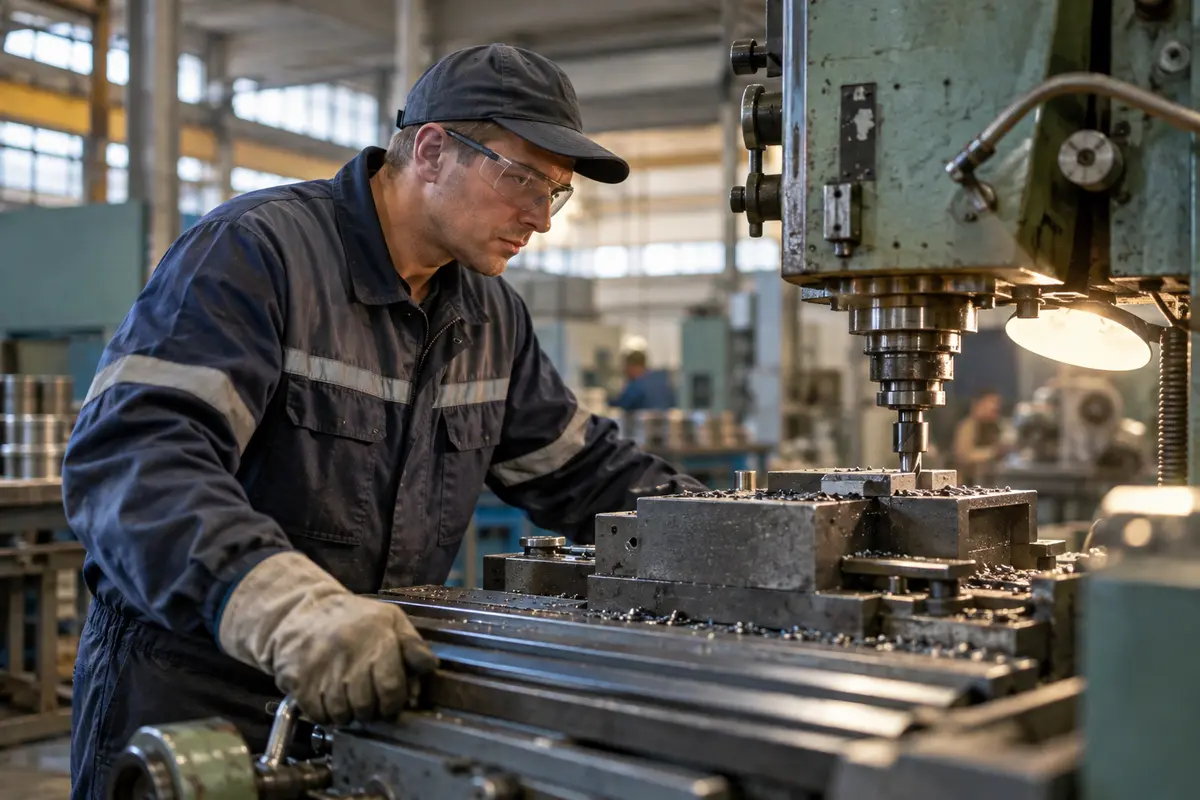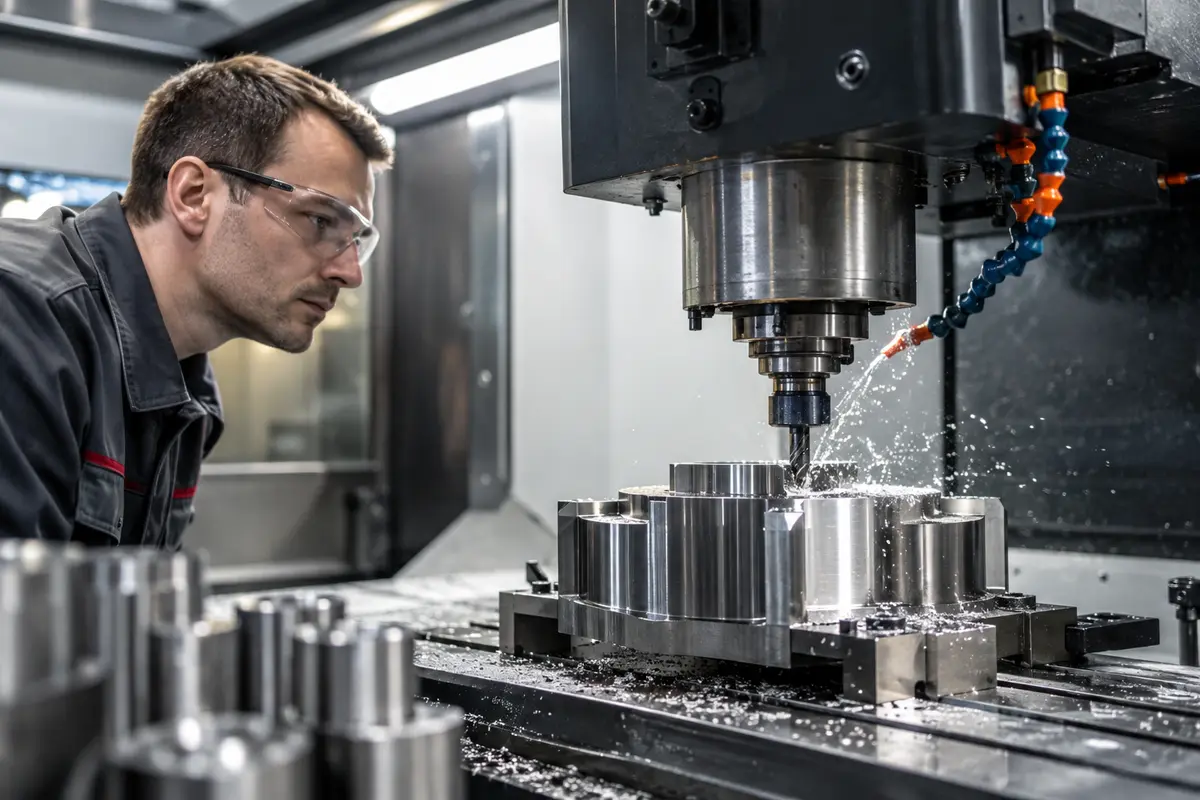
Kamaz’s Mali agreement
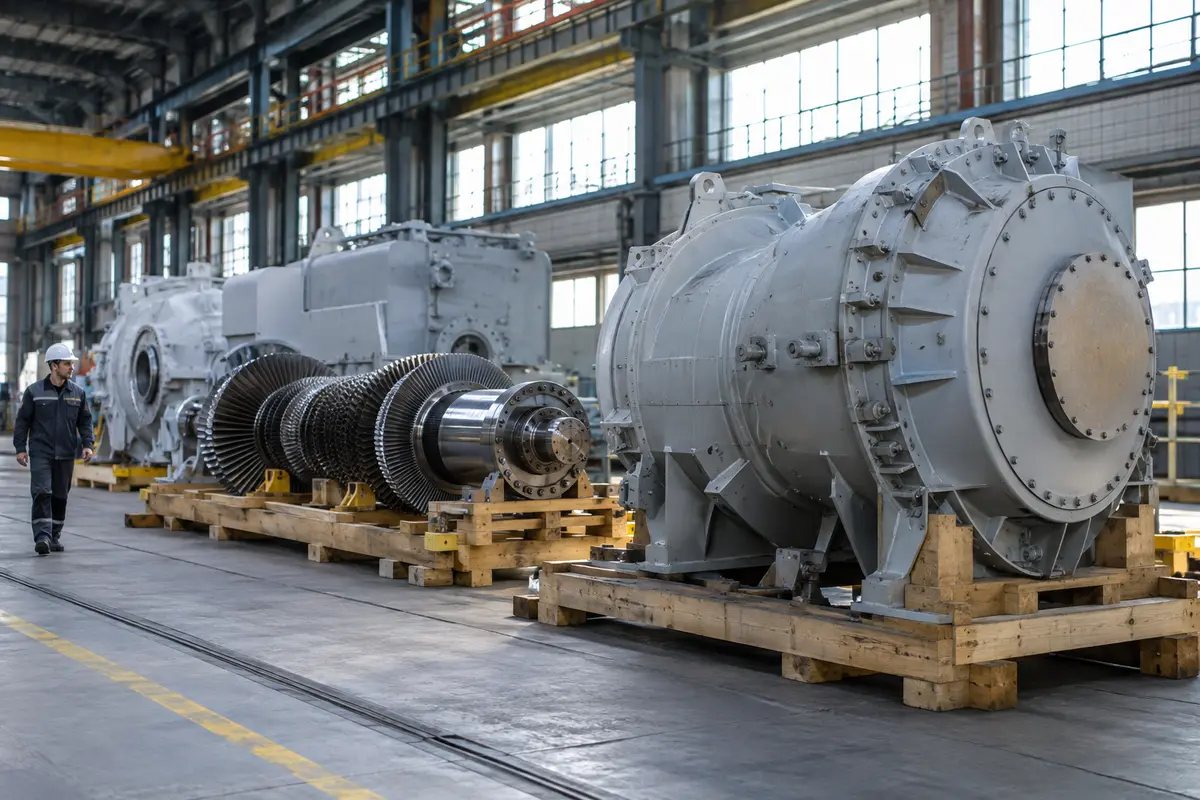
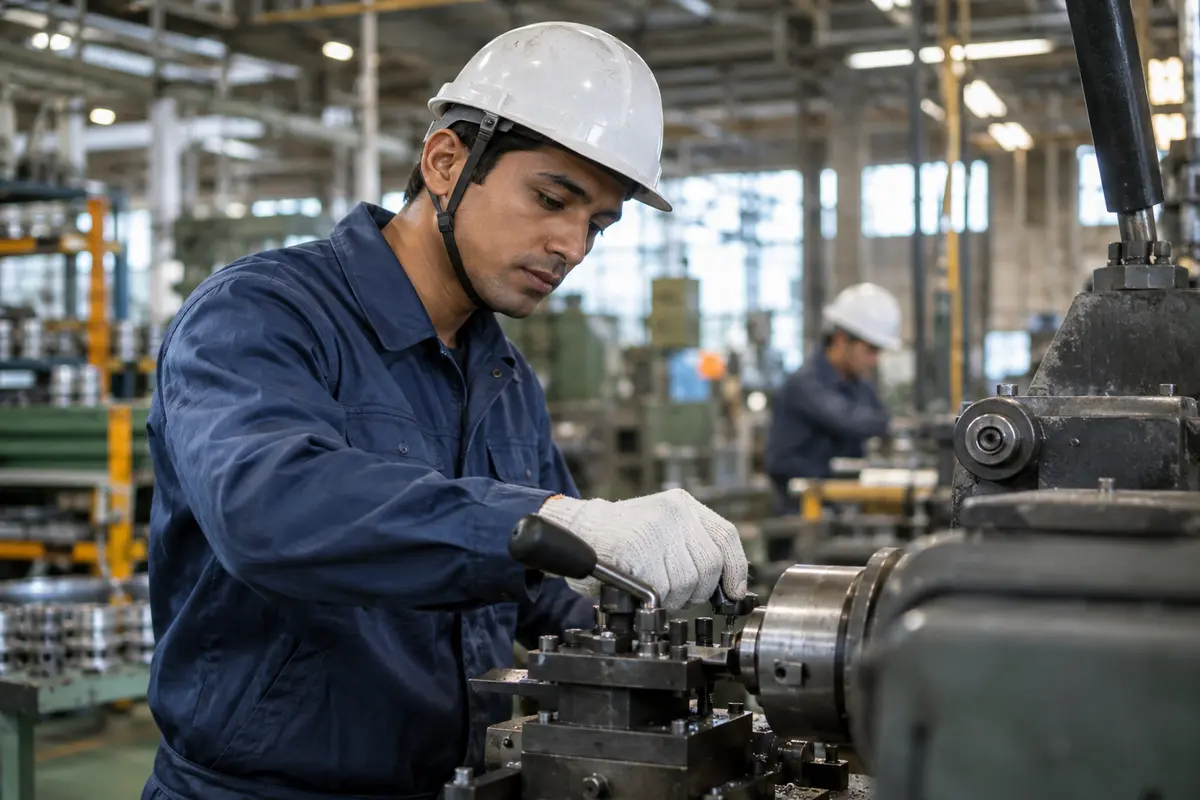
Trucks, workshops and the manufacturer’s production history.
Trucks, workshops and the manufacturer’s production history.
Samsung’s preliminary third-quarter result reflects a strong memory cycle. Estimates, reported results and industry revenue need distinct comparisons.
AI equipment finance and the obligations behind an SPV
Ahead of Prime Minister Anwar Ibrahim tabling Budget 2027 on October 9, 2026, the pre-budget roundtable reported by The Edge Malaysia on September 26, 2026 frames a fiscal consolidation that narrowed the federal deficit from 5.5% of GDP in 2022 to 3.7% in 2025 against the statutory 3%-by-2028 target of the Public Finance and Fiscal Responsibility Act 2023, now strained by a fuel subsidy bill rising from a budgeted RM15 billion to an estimated RM40 billion with Brent above US$100 - about half to be covered by additional public revenue and the remainder by reprioritisation of expenditure - while TA Research projects an expansionary envelope of RM438.9 billion, up 3.7% on the revised 2026 estimate of RM423.4 billion, focused on targeted assistance, development spending and longer-term growth rather than broad-based giveaways: a budget of continuity under pressure rather than a sharp change of course.
Russia's goods surplus for January–July 2026 reached $79.0 billion, up 19.7% on $66.0 billion a year earlier, on exports of $271.8 billion (+16.3%) against imports of $192.8 billion (+15.0%), with July alone at $13.6 billion; this analysis dates the reversal between the first-quarter reading of $25.3 billion (−17.6%) and the first-half reading of $65.4 billion (+20.7%), sizes the implied second quarter at $40.1 billion (+70.6%), reads the 1.3-point export lead as an external perimeter in which both flows re-expanded together, and shows how the $27.9 billion services deficit cuts the $79.0 billion goods surplus to a $33.9 billion current-account surplus (+57.7%).
Russia's non-commodity, non-energy exports rose 3% to $58.8 bln in H1 2026, yet the 2026 target of $155.25 bln sits 5% below 2025's $163.7 bln result.
June 2026 nominal wages rose 9.6% y/y to 114,743 rubles after 14.4% in March; real growth halved to 4.5%, and PRIME flags pro-inflationary labour market risks
MSIA president Wong Siew Hai, a 27-year Intel veteran, raised Malaysia's 2026 E&E export forecast to more than RM900 billion (US$223 billion) from RM800 billion after technology exports jumped 44% in January-July to about RM564 billion, roughly 48% of total shipments with semiconductors nearly three-quarters of that, extending a trajectory from RM601 billion to RM711 billion in 2025; the analysis attributes the surge to the AI boom in servers and data-centre equipment, supply-chain shifts away from China and expanding OSAT capacity, and weighs the vulnerabilities of an export base in which chips alone approach 36% of all shipments.
Jan-Jul 2026 trade hit RM2.16 trln (+24.7%), surplus +138.7% to RM170.5 bn; we test how durable export-led momentum is and where concentration risk sits
The average price of a new condominium in the Tokyo metropolitan area reached ¥101.35 million in January–June 2026, up 13.1% year on year and above ¥100 million for the first time, while the 23 wards set ¥142.49 million (+9.1%), the highest since comparable data began in 1973. Chiba surged 56.8% to ¥89.97 million, Kanagawa 20.0% to ¥83.46 million and western Tokyo outside the wards 10.5% to ¥75.50 million, on rising construction costs and scarce suitable land, with the government weighing a condo sale tax to curb speculation. This analysis unpacks what a nine-figure average does to ownership economics — repayments linear in principal, the Chiba discount to the metropolitan average compressed from roughly 56% to roughly 12.6% — and why outer-ring re-rating rather than central strength carried the record above the threshold.
Japan received 21.08 million foreign travellers in January–June 2026, down 2% year on year, yet April–June inbound spending held at ¥2.5 trillion (+0.2%) and spend per visitor set a quarterly record of ¥244,457 (+3.3%). This analysis traces the divergence to a single policy-sensitive market — Chinese arrivals down 56.4% after Prime Minister Sanae Takaichi's November 2025 Taiwan remarks and Beijing's travel advisory, offset only partly by Taiwan +20.9%, South Korea +18.6% and the US +7.1% — and to the mix shift that let the US overtake China as top source of visitor spending. Against the 2025 record of 42.7 million visitors and ¥9.5 trillion, it tests whether a record set on a shrinking denominator can carry the 60 million / ¥15 trillion target, whose own arithmetic implies ¥250,000 per visitor.
Overseas remittances from Japan reached a record 1.004 trillion yen, about $6.2 billion, in fiscal 2025, up 11.5% year on year, with Vietnam receiving nearly 30% of the total and Indonesia the second-biggest destination — a flow the Nikkei Asia report attributes to the increase in foreign workers. This analysis reads the record as a mirror of the foreign-workforce expansion: the arithmetic of the flow with its labelled estimates (a prior-year base near 0.90 trillion yen, an increment of about 104 billion yen, an implied rate near 162 yen per dollar, a leading-corridor sum just under 300 billion yen), the stock-versus-flow logic that binds remittances to migrant labour, the wage differential that makes sending rational, and a macro scale that is small in Japanese national accounts yet decisive in receiving households.
The final Rengo tally of July 3, 2026 put Japan's average negotiated wage increase at 5.01% across 5,368 affiliated companies — a third straight year above 5% and the first such streak since 1989–1991 — with base pay up 3.5% against a stated target of at least 3%. This analysis reads the round through its central contradiction: a nominal streak settling slightly below 2025's 5.25% and the March economists' median of about 5.05%, while real wages fell a fourth straight year. It asks what the gap says about price pass-through, why the above-5% outcome was uneven across firm sizes, and why small-firm capacity — not the headline — will decide whether the streak survives a fourth year.
Rosatom expects the Northern Sea Route to carry more than 40 million tonnes in 2026, about 15% above the 37-million-tonne record of 2025, with readings of over 42 million tonnes and scenarios of 110–150 million tonnes by 2035 and up to 200 million by 2040; this analysis asks why today's record rests on cargo moving inside the route's waters and what the container-line feasibility study, the eastern and western hub ports and the nuclear icebreaker fleet would have to change for transit to become real.
Russia's fixed capital investment fell 2.3% in 2025, the first decline in five years, as business shifted from expanding capacity to maintaining it
A record 26% of China's listed firms are expected to report a net loss for 2025, a survey-based estimate reported by Semafor via Yahoo Finance on March 3, 2026, which traces the red ink to a prolonged real estate downturn that dragged consumption down with it. This analysis reads the record against three structural facts from the same report: Beijing's years of pledges to tackle flagging consumer spending have had little effect so far; private consumption remains below 40% of GDP versus 50–70% in the G7; and excessive competition — more than 100 EV manufacturers — has stoked deflation fears that experts at Eurasia Group expect to deepen into a deflationary spiral in 2026, with rising fears of consequences beyond China's borders, in the words quoted from The Wire China: "We should all hold our breath."
Russia's 2025 retail turnover reached 61.315 trillion rubles, +2.6%; December added 6.1332 trillion (+3.9%) as non-food outpaced food - a baseline-regime read.
Japan closed 2025 with a record 42.7 million inbound visitors, up 15.8% on 2024's 36.9 million and the first year above 40 million, and record inbound spending of ¥9.5 trillion (about US$60 billion), up about 16% on ¥8.1 trillion, while spending per head rose only 0.9%; this analysis traces the record to a weak yen near 150/US$ against about 110 in 2019 and to a regional market structure — South Korea 9.5 million (+7.3%), China 9.1 million (+30.3%), Taiwan 6.8 million (+11.9%), the United States 3.3 million (+21.4%) — whose vulnerability surfaced in December 2025, when Chinese arrivals fell about 45% after Prime Minister Sanae Takaichi's November remarks on a Taiwan contingency, and tests the 2030 targets of 60 million visitors and ¥15 trillion, which imply about ¥250,000 of spending per visitor against roughly ¥222,000 in the record year.
The Edge Malaysia's year-end review frames 2025 as the year of 'T&A' — Trump, tariffs and tech with the AI boom on top — in which US equities rode the artificial-intelligence rally while Malaysia's benchmark index ended the calendar roughly unchanged from where it had stood for about thirteen years; behind the flat headline ten of thirteen Bursa Malaysia sectoral indices finished in the red, led by healthcare down 36.4%, technology down 12.1% and telecoms down 11.3%, with only REITs (+7.3%), plantation (+6.6%) and financials (+0.3%) closing positive, and the review sets 2026 on four watch items — whether the AI rally is a bubble, US Main Street jobs and consumption, the narrowing US-Malaysia yield gap and possible foreign portfolio rebalancing — above domestic supports (the 13th Malaysia Plan, Budget 2026, low inflation, fiscal reforms, a current account surplus) and themes from data centres and the Johor-Singapore SEZ to Sarawak and Sabah infrastructure, plantation and banks.
Russia's retail turnover will top 60 trln rubles in 2025, but Jan-Oct real growth is just +2.4% vs +10.2% nominal as the Economy Ministry cuts forecasts.
Russia's machine-tool output grew over 2.5-fold in four years; 2030 goals of a 60% domestic share and doubled output ride on a compensated-discount bridge
Consensus forecasts for 2026 look benign — less tariff uncertainty, global fiscal and monetary easing, lower oil — but a My Say column in The Edge Malaysia of December 8, 2025 argues they are over-optimistic because the downside risks take time to materialise; the column traces four 2025 dislocations (the twin trade shock of U.S. tariffs and the Chinese export surge to non-U.S. markets, a destabilising United States, feverish markets flagged by BIS warnings on private credit and crypto, and accelerating technological change) into 2026 scenarios of U.S. political turbulence, equity corrections, fading resilience via slower AI capex and the U.S. fiscal deficit, and trade-deal backlashes leading to Fed easing, faster innovation and re-allocated trade and capital, concluding that the strength of policymaking will distinguish winners from losers.
Enterprises reporting missing workers rose from 6% in 2019 to 37% in 2024 while potential labour force fell from 1.6 million to 772 thousand, yet the deficit converted into record hours (38.2 a week), record formalisation (96.2% written contracts) and scarcity-driven wages (43.7 to 89.1 thousand rubles) rather than well-being: labour's share of GDP stays at 44-45% against about 55% in the OECD, and more than a third of households lack a reserve. This analysis traces, on Institute of Economics, TsMAKP, HSE, hh.ru and SuperJob evidence, why a quantitative shortage became a qualitative constraint.
Russia's market for new vehicles is set to close 2025 about a quarter below 2024: on October 14, 2025 the Ministry of Industry and Trade expected full-year sales of 1.3–1.4 million units after just over one million vehicles of all types were sold in January–September, down 24.6% year on year, with the fourth quarter forecast at about 350 thousand units (-28.7% y/y against 490.7 thousand in Q4 2024 and -13.9% against 406.7 thousand in Q3 2025); preferential car loans and leasing delivered about 115 thousand domestically produced vehicles in eight months, and on December 1, 2025 minister Anton Alikhanov allowed for up to 1.5 million units with a 1.25–1.3 million passenger-car range against almost 1.2 million sold in January–October, while the 2023 level of about 1.3 million remains the reference floor.
The draft federal budget for 2026-2028, considered at a government meeting and reported by Interfax on September 24, 2025, plans non-oil-and-gas revenue of 31.365, 33.86 and 36.165 trillion rubles (+10.3%, +8%, +6.8% on the 28.430-trillion 2025 base), oil-and-gas revenue of 8.919 (3.8% of GDP), 9.05 and 9.705 trillion (3.5% in each of the latter two years), baseline oil-and-gas revenue of 8.957, 8.708 and 8.922 trillion, and deficits of 1.6%, 1.2% and 1.3% of GDP; this analysis reads the four Ministry of Finance lines as one trajectory - a decelerating non-oil engine carrying nearly four fifths of planned revenue, and a 2027 baseline dip that routes 0.342 trillion rubles of oil money past the spending side under the fiscal rule, coinciding with the horizon's lowest deficit.
Autumn amendments raised Russia's 2025 deficit target by 1.944 trillion rubles to 5.737 trillion (2.6% of GDP), cutting the revenue estimate by the same amount, to 36.562 trillion; this analysis reads the year's three deficit targets — 1.173 (0.5%), 3.792 (1.7%) and 5.737 trillion rubles (2.6%) — as one trajectory of revenue sensitivity, and closes it with the preliminary January–November result of 4.276 trillion (2%) and Anton Siluanov's confirmation that the deficit stayed within 2.6% of GDP.
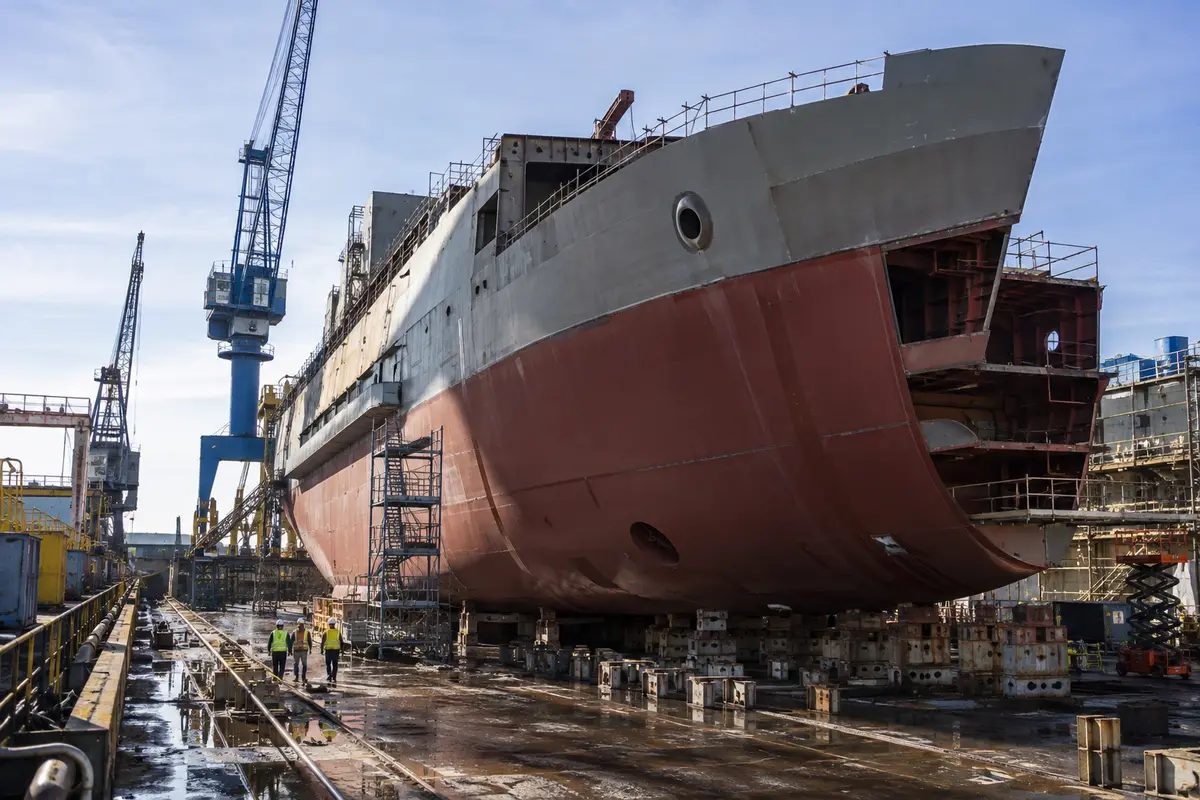
A day after his White House summit with Donald Trump, South Korean President Lee Jae Myung attended the christening of the NSMV State of Maine at Hanwha Philly Shipyard — the first US yard bought by a Korean company and the centerpiece of MASGA. This analysis unpacks the $5 billion modernization plan (two dry docks, three berths), the capacity ramp from 1.5 to 20 ships a year, and the three US Navy MRO contracts that form the quiet proof of concept, arguing that this pipeline, not headline diplomacy, will decide whether MASGA becomes a real industrial program.
Russia's reserves hit a record $754.9 bn in December 2025, but gold revaluation — not buying — drove the 43.3% share, highest since March 1995.
Rengo's final tally put the 2025 shunto average at 5.25% across 5,162 companies and roughly seven million members — the highest since 1991 — yet Takahide Kiuchi's April column for the Nomura Research Institute read the same round as lacking momentum: third-round gains of 5.42% including regular rises and only 3.82% on base pay, small firms at 5.00% against 5.44% at large employers, hikes merely tracking inflation, real wages negative into spring and recovering only around mid-year, and a settlement inadequate to recoup past real-income losses. This analysis weighs the record against the critique and traces what the gap between them means for the Bank of Japan, household consumption and Japan's exit from the lost decades.
In its Financial Stability Review for Q4 2024 - Q1 2025, commented on by Interfax on June 1, 2025, the Bank of Russia expects the majority of Russian companies to remain financially stable and able to service their obligations in 2026 if current trends persist, while individual borrowers may need debt restructuring; the review also records a slowdown in lending, mortgage arrears rising to 0.9 percent and banking-sector capital adequacy at 13.0 percent, a set of signals this analysis reads as one chain of a restrictive monetary policy cycle being absorbed by the banking system's capital buffer.
After outperformance from the Feb-2024 low of 4.7987/USD, repeating 2024 is harder; with 26 of 28 seeing OPR at 3%, the ringgit's 2025 drivers sit abroad
Russia's 2024 capital investment grew 7.4% to 39.533 trillion rubles, fading quarterly from +14.8% to +4.9%; the ministry sees +1.7% in 2025 and a 2026 minus
Japan counted a record 2.3 million foreign workers in October 2024, up 12.4% year on year, and a record 342,000 businesses employing at least one of them, up 7.3% — in a labour market with unemployment below 3% for almost four years. This analysis reads the twin records against the structural frame: a working-age population that peaked in 1995, a demand side that never loosens, and the JICA estimate of 6.88 million foreign workers needed by 2040 to meet growth targets. It explains why a record workforce still leaves a gap of about 4.6 million workers, and what the 2040 coordinate implies for intake policy, retention and the employers who must widen and deepen foreign hiring at once.
Malaysia's electrical and electronics sector closed 2024 with Intel's US$7 billion (RM31.3 billion) advanced packaging commitment in Penang and Infineon's RM25 billion fab expansion on top of RM47 billion in approved investments for January–September — 53% of all manufacturing approvals — while E&E exports rose from RM134 billion in Q1 to RM156 billion in Q3, reaching RM491 billion in January–October (+1.5%), and the National Semiconductor Strategy's RM25 billion incentives met mixed reactions over Budget 2025 allocation details.
Vedomosti's year-end review of December 26, 2024 reads 2024 as a chain: unemployment at 2.3% in October 2024, wages up 18.0% over January–September 2024, real disposable incomes up 8.2% and consumer spending up 6.6% — a consumer boom born of the labour deficit, which the newspaper also names as the obstacle to the inflation target; this analysis traces the chain into the disinflation trajectory of 2025.
Friendly-country share 60.5% to 84%, volumes $194.2bn to $146.3bn: what destination concentration means for resilience and the 2030 two-thirds target math.
At the "Russia Calling!" forum on December 4, 2024, VTB forecast Russian mortgage issuance of about 5 trillion rubles in 2024 (down about 35%) and about 4 trillion rubles in 2025 (at least minus 20%); DOM.RF counts about 1.4 million loans for 5 trillion rubles in 2024 and 1.2-1.3 million loans for 4-4.5 trillion in 2025 if rates stay above 20%, while the market rate hit 28.4% on November 15, 2024 and subsidised issuance dipped in early November as programme limits ran out.
Russia's 2024 grain harvest is forecast at 130 million tonnes against 147.9 million in 2023; this analysis traces how the 10–18-million-tonne shortfall redistributes the world balance, why the domestic ruble price signal diverges from FOB and Chicago, and what record October exports, stocks down 14.5% and the smallest winter sowing since 2013 mean for 2025.
Russia's real disposable incomes rose 9.4% in Q3 and 8.6% in nine months of 2024, above the 7.1% forecast; the year closed at +8.4% with real wages +8.7%.
Data Insight forecasts Russia's 2024 e-commerce turnover at 10.7 trillion rubles (+36%) and 7.4 billion orders (+43%) — growth decelerating against 2023's +48% and +80% while concentration hardens: 81% of orders in July 2023–June 2024 went to four marketplaces versus 58% in 2021. This analysis traces what the combination changes for the big four, for the category stores holding the roughly 1 trillion ruble electronics pool, and for the e-grocery and e-pharma pockets outside them.
Unemployment in Russia fell to 3.2% for 2023 and reached a historic minimum of 2.4% in June 2024, holding there in July with 1.9 million unemployed against a labour force of 76.3 million and only 0.4 million registered with the employment service; against Ministry of Labour data of 71.9 million employed (+1.6 million) and rising vacancies on a 3.6% GDP growth path, this analysis of Prime's October 18, 2024 piece traces what stands behind the record — a vanished labour reserve, structural imbalances, forced retention of unskilled employees and Okun's-law pressure — and what it costs companies through recruitment, retention and scarcity-driven wage dynamics.
As of mid-September 2024, Rapidus's IIM fab near New Chitose Airport in Chitose, Hokkaido, was more than 50% complete, less than six months before the start of its cutting-edge prototype line, inside a project whose total cost is estimated at up to ¥5 trillion and whose promised return is over ¥18 trillion (about $120 billion) in cumulative economic windfall through fiscal 2036. This analysis reads the halfway mark as a regional industrial-policy test: Hokkaido's third-highest land-price rise in 2024 and ASML's ~25-person Chitose office as the first measurable evidence, and an ordered set of gates — 2-nanometer samples by July 2025, mass production in 2027, cost discipline — as the tests that would confirm or break the windfall thesis.
June 2024 exports grew 1.7% to RM126.05 bn, missing consensus; RHB, UOB and MIDF see a base-effect wobble inside the E&E upcycle, with imports leading
Russia produced 18.6 thousand machine tools in January–April 2024, up 21.5% year on year across 43 product types, an ISIEZ HSE report shows
Malaysia is the sixth-largest exporter of electronics and semiconductors with 7% of global semiconductor trade flows and 13% of back-end operations, yet 97.6% of its RM262.7 bn E&E investment of 2021-2023 was foreign; the National Semiconductor Strategy with RM25 bn incentives and a 60,000-engineer target answers a five-to-eight-year window and Penang's land, water and talent limits.
BNM's fifth consecutive OPR hold at 3%, the 'undervalued' ringgit framing and GLC repatriation: why recovery needed coordination, not just rate gaps
After a 4.9% slide in 2023, the consensus saw the ringgit firming in 2024 (OCBC RM4.58, Standard Chartered RM4.40, Bloomberg survey RM4.38-4.62); The Edge Malaysia's structural case - lagging productivity, wage gaps, depreciation as a competitiveness valve - met a 5% fall in fifty days.
Putin's 2030 targets — non-resource exports +2/3, imports ≤17% of GDP, manufacturing GVA +40%, investment +70% — tested as one self-constraining system.
 Parkent’s Chashma Village: Folk Traditions Near Tashkent
 Uzbek Food and Cultural Traditions: From London’s Festival to Regional Tables
 Nilu and Sangardak: Village Tourism in Surkhandarya
 Imam al-Bukhari’s Heritage and Samarkand’s Pilgrimage Landscape
 Khiva’s Walled City: Architecture, Palaces and Living Traditions
 One Day in Kasri Orifon: Bukhara’s Pilgrimage Village
 Uzbekistan's Tourism Expansion: Heritage Cities, Living Crafts and Regional Routes
 Bukhara’s Biennale: Contemporary Art in Historic Spaces
 Tashkent’s Museums, Mahallas and New Cultural Spaces
 Rishtan’s Craft Neighbourhood and the Fergana Valley
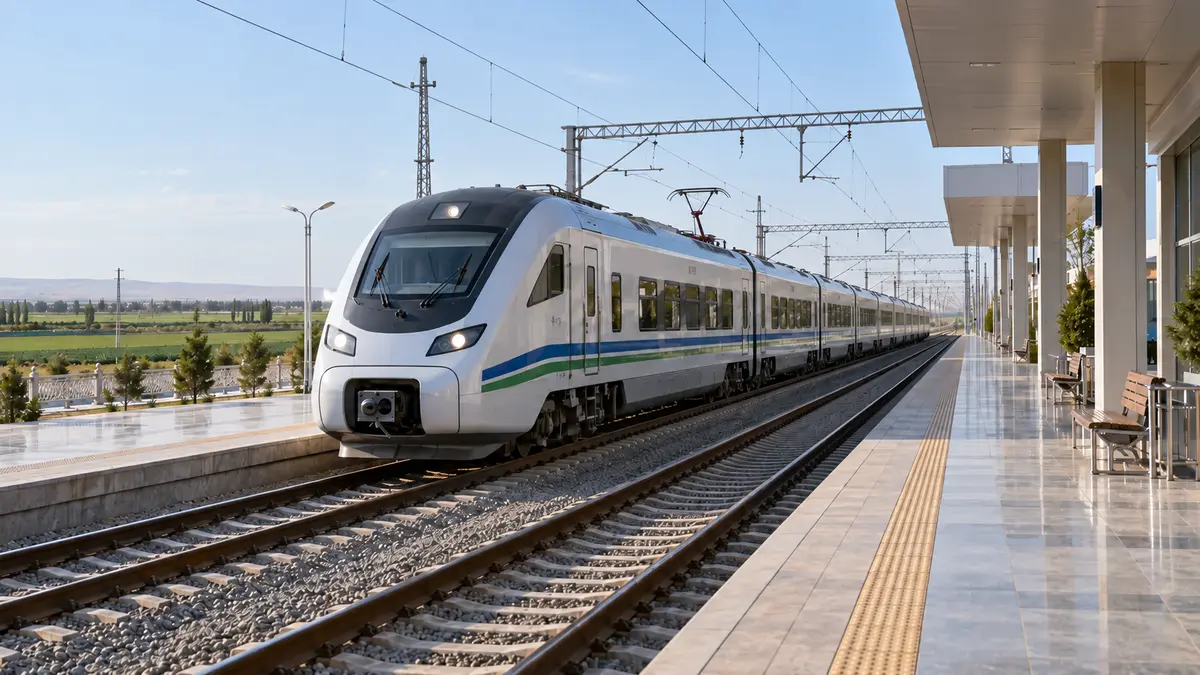 Uzbekistan’s Western Rail Corridor and the Journey to Khiva
 Ageas agrees Esure acquisition to widen UK insurance distribution
 Ancient Fortresses and Museums of Western Uzbekistan
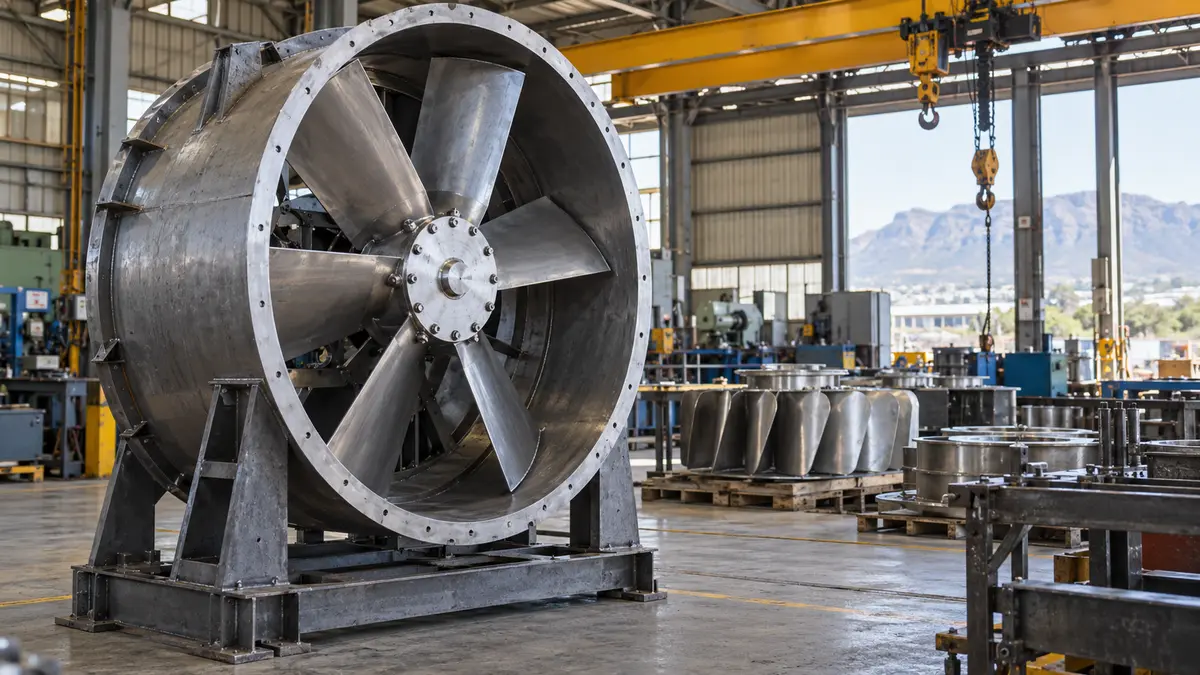 LH Marthinusen opens R32 million Germiston fan factory