Moving Up the E&E Value Chain: Malaysia's Five-to-Eight-Year Window, a 97.6% FDI Skew and the National Semiconductor Strategy
When Malaysia's National Investment Council decided in April 2024 that the country needed a National Semiconductor Strategy, and handed the Ministry of International Trade and Industry (MITI) a deadline of end-May 2024 to unveil it, the instruction landed on an industry with an unusual shape. It is the world's sixth-largest exporter of electronics and semiconductors; it accounts for about 7% of global semiconductor trade flows and roughly 13% of global back-end operations, the chip testing and packaging tier; and yet its investment base is 97.6% foreign, with domestic direct investment at just 2.4%. This analysis reads the strategy not as an industrial-policy announcement but as a correction attempt: of a capital skew, of a position in the value chain, and of a window that industry figures put at five to eight years.
The three numbers that define the country's standing — sixth exporter, 7% of trade flows, 13% of back-end operations — are not three views of the same strength. They are a map of where in the chain the country earns and where it does not, and the strategy announced in 2024 is best understood as an attempt to redraw that map before the window in which redrawing is possible closes. What follows separates the position from the skew, the skew from the window, and the window from the instruments the state has chosen to act on it.
Sixth exporter, 13% of the back end: reading the three numbers
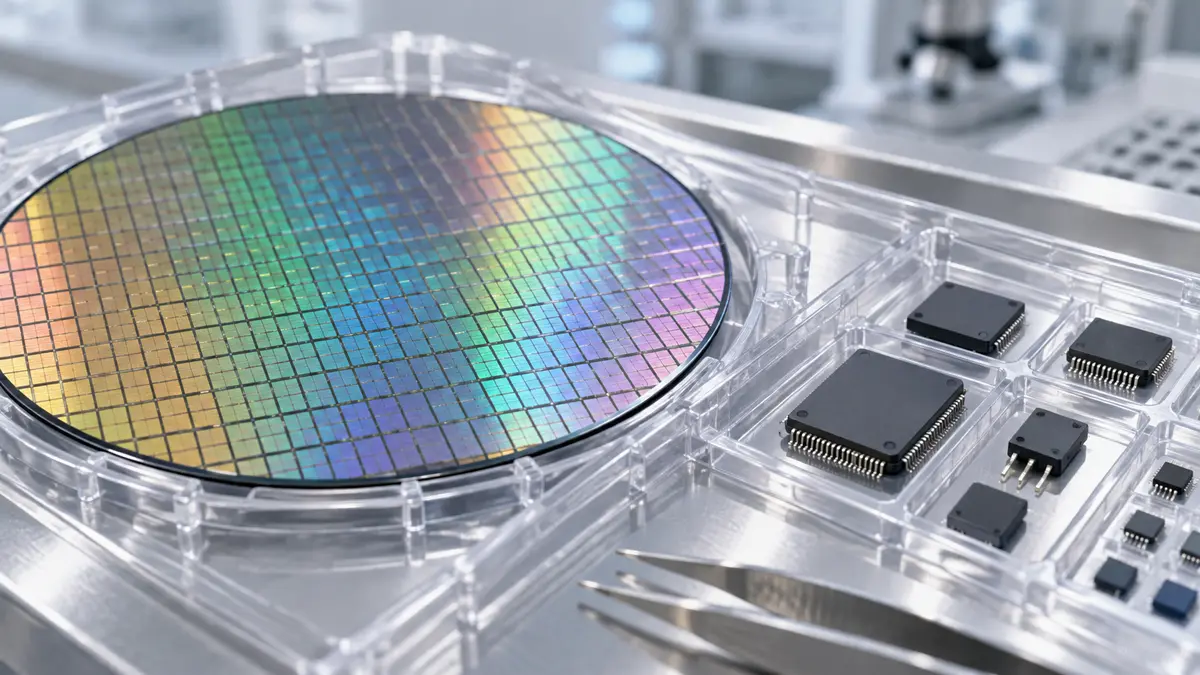
Malaysia's place in the global electrical and electronics (E&E) chain is large by any export ranking: sixth in the world among exporters of electronics and semiconductors, with about 7% of global semiconductor trade flows passing through the country. The third number is the one that explains the first two. Around 13% of the world's back-end operations — the testing and packaging of chips after the wafer leaves the front-end fab — sit in Malaysia. The country is not a marginal participant that happens to export a lot; it is a structural node in the final stage of semiconductor manufacturing, and its export rank is a consequence of that node position rather than an independent fact.
Read together, the three numbers also show the shape of the constraint. A 13% share of back-end operations against a 7% share of total trade flows means the country's weight is concentrated in the stage of the chain where it is strongest, and thinner in the stages where value per unit of activity is higher: chip design, front-end wafer fabrication, equipment and materials. The back end is where volume, discipline and cost control decide competitiveness; the front end and the design layer are where intellectual property and pricing power sit. Malaysia's export rank was built on the former, and the question the 2024 strategy implicitly poses is whether the latter can be added without losing the former.
Why the back end is both an asset and a ceiling
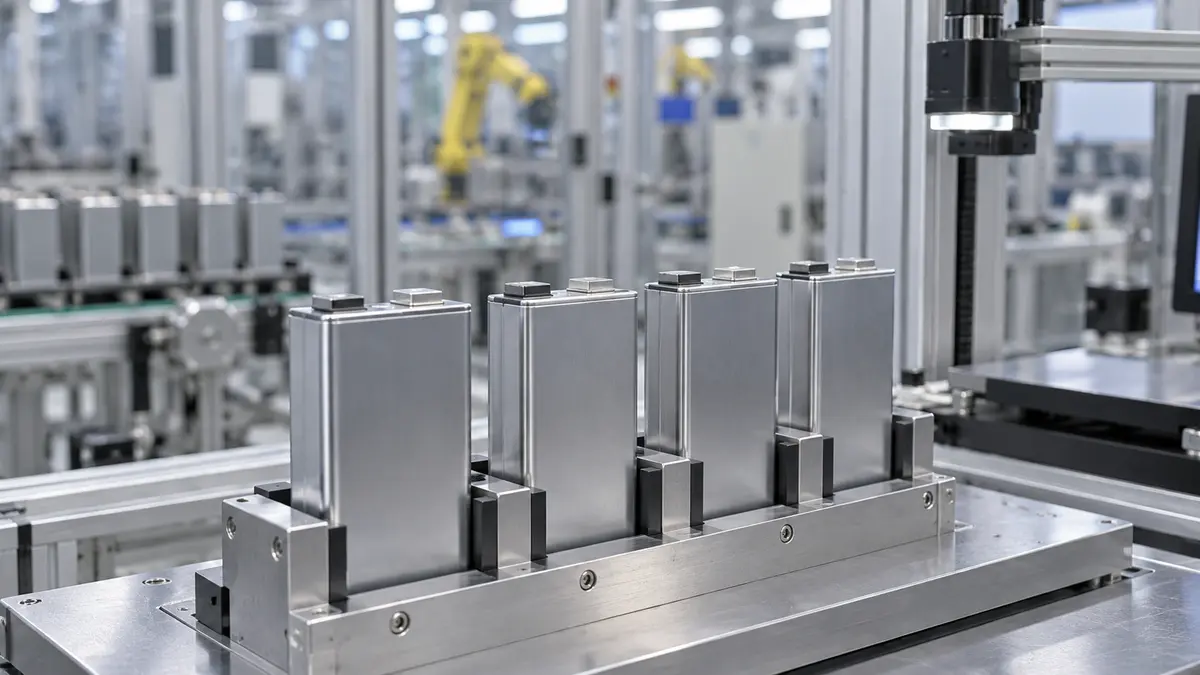
The back end is an asset because it is difficult to replicate quickly: testing and packaging capacity requires qualified plants, stable utilities, logistics corridors and, above all, an experienced engineering and technician workforce that accumulates over decades. Malaysia's 13% share is the sediment of fifty years of such accumulation, and no competitor can buy it in a single investment cycle. It is a ceiling for the same reason: a country whose semiconductor identity is defined by the final stage tends to attract investment that reinforces that stage, because that is what the country is demonstrably good at, and because multinational capital allocates each link of the chain to the location that already performs it best.
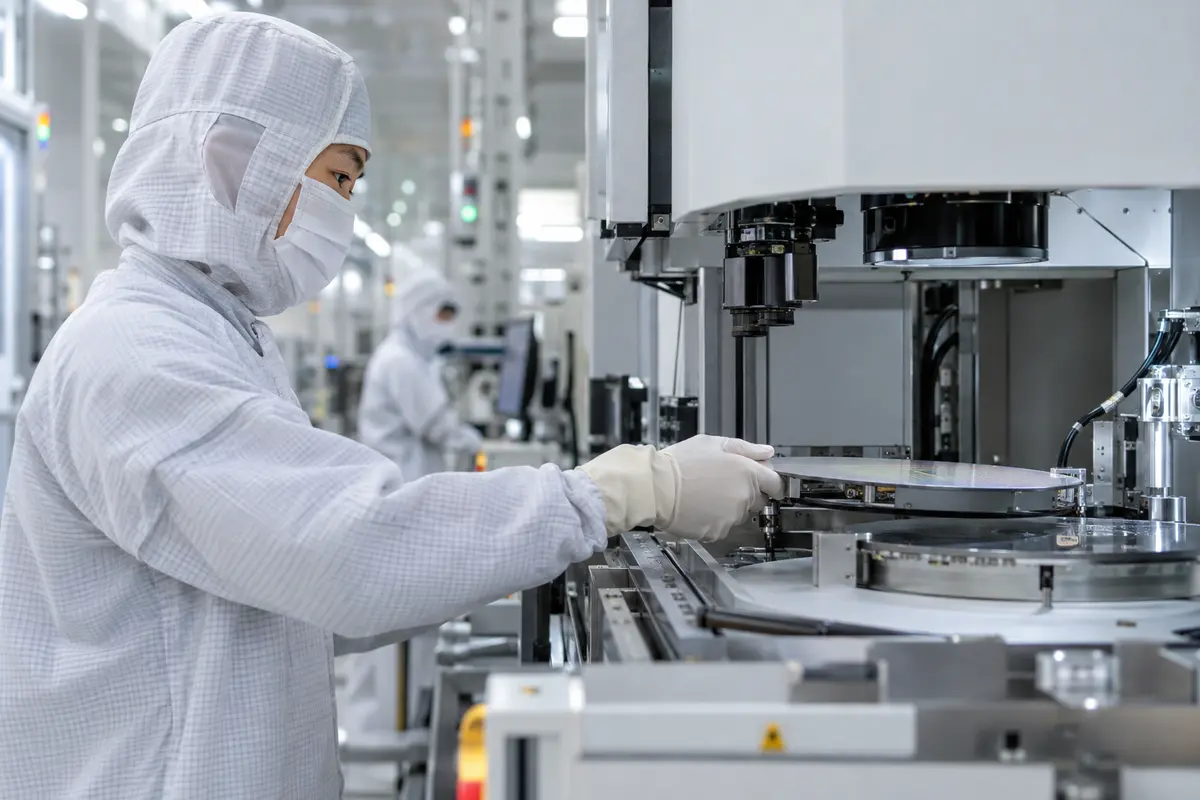
Moving up the chain therefore does not mean abandoning the back end; it means extending it into advanced packaging, the segment where packaging itself becomes a performance technology rather than a finishing operation, and adding design and front-end activity alongside it. That is precisely the direction the investment announcements of 2024 point to, and precisely the direction in which the country's capital structure is least prepared to follow, because advanced packaging and design are capital- and talent-intensive in ways that assembly is not.
The 97.6% skew: three years of E&E investment with almost no domestic capital
Between 2021 and 2023, RM262.7 billion was invested in Malaysia's E&E sector. Of that total, 97.6% was foreign direct investment and only 2.4% was domestic direct investment. The ratio is not a footnote to the sector's success story; stakeholders in the industry flagged it as a priority to correct, because it describes who owns the capacity that the export rankings celebrate. A sector that is the sixth-largest exporter in the world and 2.4% domestically funded is, in ownership terms, a sector hosted by Malaysia rather than a sector of Malaysia.
The consequences of the skew are structural rather than rhetorical:
- footloose capital: investment decisions are taken in boardrooms outside the country, against global portfolio logic, so capacity can be re-allocated elsewhere when that logic changes, regardless of local performance;
- thin spillovers: the domestic supplier base around foreign plants stays narrow when domestic firms hold almost no equity in the sector, limiting the technology and management transfer that local participation would carry;
- value capture abroad: profits generated by Malaysian operations are largely repatriated, so the gap between what the sector produces in the country and what the country retains remains wide;
- weaker bargaining position: a host economy that supplies land, utilities and labour but not capital has less leverage over which activities — and which value tiers — are placed on its territory.
What a 2.4% domestic share leaves on the table
The 2.4% figure is also a statement about the domestic firms that did not participate. Industry voices in 2024 argued for a chip fund modelled on European practice, aimed at local startups and small and medium enterprises, precisely because the missing domestic layer is not missing ambition but missing balance-sheet capacity. A local supplier or design startup competing for a place in a multinational's supply chain faces capital costs and qualification cycles that a 2.4% domestic investment share makes nearly impossible to bridge without public instruments. The fund proposal is, in effect, an attempt to convert the state's incentive budget into domestic equity in the chain.
None of this implies that foreign investment is the problem. The RM262.7 billion of 2021–2023 built plants, jobs and export capacity that the economy needed, and the strategy of 2024 does not propose to slow it. The argument is about composition: an industry whose growth is 97.6% externally financed grows at the speed and in the direction of external decisions, and the window described below is too short to leave that composition unaddressed.
A once-in-a-generation window of five to eight years
The urgency behind the strategy comes from a timing judgement that industry figures stated in unusually plain terms. Loo Lee Lian, chief executive of InvestPenang, and Lai Pin Yong of the venture firm BlueChip VC described the current moment as a once-in-a-generation opportunity, and put its duration at five to eight years — with the caution that it could be shorter than five. A window of that length is not a planning horizon; it is a deadline. The relocation of semiconductor capacity that began after the supply shocks of the early 2020s, and the upcycle in global chip demand, opened a set of choices that competing locations are racing to capture, and choices of this kind are made once per investment cycle.
The constraints that decide whether Malaysia captures the window are, in the industry's own listing, physical and human:
- land: suitable industrial land in the established clusters is scarce, and new capacity competes for the same parcels;
- water: semiconductor manufacturing is water-intensive, and supply in the main cluster is already a planning constraint;
- congestion: ports, roads and utilities around the mature industrial zones carry the load of five decades of accumulation;
- engineers: the workforce that makes the 13% back-end share possible is the same workforce every new plant must draw from, and it does not scale at the speed of announced investment.
Against those constraints stands competition that did not exist at the same intensity a decade ago: other ASEAN economies and India are courting the same relocating capacity with their own incentive packages and their own labour cost advantages. A window in which several locations compete for the same projects closes when the projects are placed, not when the cycle ends. That is why the five-to-eight-year estimate matters more than any single incentive figure: it says that the allocation decisions the strategy is trying to influence will largely be made inside this decade's first half.
The talent constraint binds first

Of the four constraints, engineers bind first, because land and water can be added with capital and time while an engineering workforce cannot. The industry's response in 2024 was a call for a national talent and STEM blueprint — a coordinated plan for producing, retaining and returning engineers at the scale the announced plants require — and the strategy that followed adopted the target in the most concrete form available: training 60,000 engineers. A target of that size is an admission of the scale of the gap; it is also the single commitment in the strategy that cannot be delivered by writing a cheque, which is what makes it the most informative part of the package.
The National Semiconductor Strategy: the state's answer to a private-capital problem
The National Semiconductor Strategy was tasked to MITI by the National Investment Council decision announced by Prime Minister Anwar Ibrahim in April 2024, with publication due by the end of May 2024. Its instruments, as they crystallised over the year, match the diagnosis above: targeted incentives of RM25 billion to steer investment toward the value tiers the country wants to add, and the 60,000-engineer training target to relieve the constraint that binds first. Read against the 97.6% skew, the incentive envelope is an attempt to make the composition of future investment different from the composition of 2021–2023; read against the window, it is an attempt to place the country's bid inside the five-to-eight years in which the bid can still win.
The design questions are the ones any incentive package of this size must answer. Incentives can attract a plant, but they cannot by themselves change which tier of the chain the plant occupies, and tier is what the value-chain argument is about. They can lower the cost of capital for a multinational, but they do not create a domestic supplier base unless domestic firms are explicitly in scope — which is where the European-style chip fund proposal for local startups and SMEs connects to the strategy's logic. And they can announce a talent target, but the blueprint that delivers 60,000 engineers requires universities, industry placement and retention policy moving together, over a period longer than the window itself.
How the window opened: the 2024 investment ledger
The months after the strategy's unveiling tested it faster than most industrial strategies are tested. Intel committed US$7 billion to advanced packaging capacity in Penang, and Infineon committed RM25 billion to fab capacity — two announcements that sit exactly on the tier the strategy wants to climb, because advanced packaging is the extension of the back end into higher value rather than a departure from it. Approved E&E investments reached RM47 billion in the first nine months of 2024, equal to 53% of all manufacturing approvals in the period, and cumulative approved E&E investment since January 2021 reached RM309.7 billion. E&E exports totalled RM491 billion in January–October 2024, up 1.5% year on year — a modest growth rate on a very large base, consistent with a sector in upcycle rather than boom.
The year-end review of the sector published by The Edge Malaysia on Jan 13, 2025 put the medium-term frame around those flows: the sector is projected to grow 11.41% annually over 2024–2029, reaching US$27.48 billion. A compound growth rate of that order, applied to a sector that already holds 13% of global back-end operations, describes an industry expanding inside its existing tier while the strategy attempts to add new ones. Whether the expansion and the climb happen together is the empirical question the next five years will answer.
Verdict: four tests for the climb
The strategy's success will not be measured by the size of its incentive envelope but by movement in four observable ratios and capacities:
- the domestic share of E&E investment: any sustained rise above the 2.4% of 2021–2023 would be the first evidence that the capital skew is being corrected rather than described;
- the engineer pipeline: progress toward the 60,000-engineer target, measured in graduates placed and retained in the sector, not in programme announcements;
- Penang's physical capacity: land release, water supply and decongestion projects delivered at the pace the announced plants require, since a constraint unrelieved becomes a relocation argument for a competitor;
- tier migration: the share of new investment landing in advanced packaging, design and front-end activity rather than replicating existing assembly capacity.
On the evidence of May 2024, Malaysia entered the window with a strong position, a skewed capital base and a strategy whose instruments match its diagnosis. On the evidence of the year that followed, the window was real: the commitments arrived, the approvals concentrated in E&E, and the export base kept compounding. What the evidence does not yet show is the correction of the skew or the delivery of the talent pipeline — the two commitments that decide whether the country's 13% of the back end becomes a platform for the tiers above it or remains, a decade from now, the ceiling it was in 2024. The position, the skew and the window were reported by The Edge Malaysia on May 20, 2024.















Leave a comment