Malaysia's Budget 2027 Preview: RM438.9 Billion of Expansionary Spending, a RM40 Billion Fuel Subsidy Shock and the 3% Deficit Target for 2028
Malaysia is heading into Budget 2027 with a fiscal consolidation story that is working, but under fresh strain. The federal fiscal deficit has narrowed from 5.5% of GDP in 2022 to 3.7% of GDP in 2025, and the government remains committed to the statutory target of 3% of GDP by 2028. Yet higher energy prices, with Brent above US$100, have pushed the fuel subsidy bill from a budgeted RM15 billion to an estimated RM40 billion, and that gap is now to be financed through additional public revenue and reprioritisation of expenditure. Ahead of Prime Minister Anwar Ibrahim tabling Budget 2027 on October 9, 2026, TA Research expects an expansionary package of RM438.9 billion in total spending, up 3.7% on the revised 2026 estimate of RM423.4 billion, weighted toward targeted assistance, development spending and longer-term growth rather than broad-based giveaways.
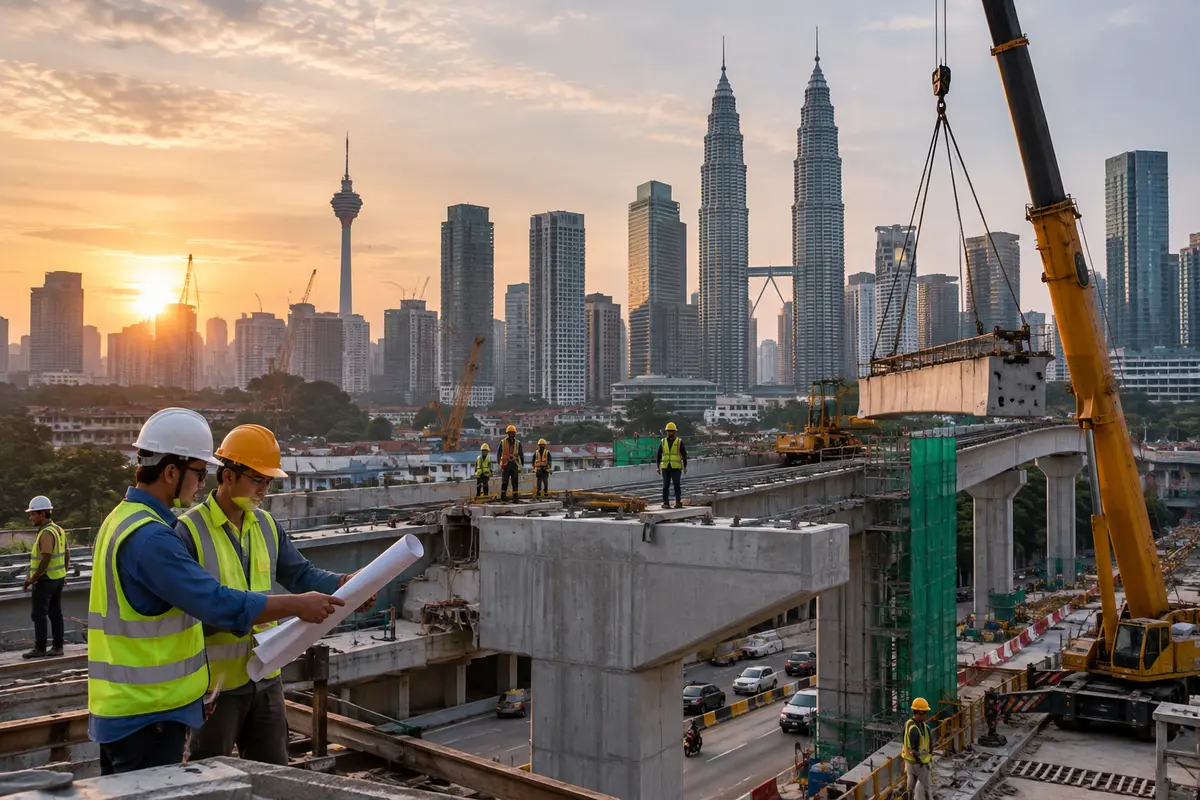
Budget 2027 on the calendar: an expansionary envelope for October 9
KUALA LUMPUR, September 26, 2026 — The next federal budget is scheduled to be tabled by Prime Minister Anwar Ibrahim on October 9, 2026. The pre-budget debate has been framed this week by The Edge-HSBC Pre-Budget 2027 Roundtable, convened around the fiscal agenda and reported by The Edge Malaysia on September 26, 2026, which brought the consolidation path and the pressures on it into a single frame: heightened external uncertainties, an expensive fuel subsidy bill, and a statutory deficit target that the Treasury insists remains on track.
The spending envelope expected for the new budget is expansionary. TA Research projects total spending of RM438.9 billion for Budget 2027, an increase of 3.7% over the revised 2026 estimate of RM423.4 billion. In ringgit terms that is an increment of RM15.5 billion between the revised base and the projected envelope — a meaningful expansion in nominal terms, yet one that TA Research characterises not as a stimulus turn but as "a budget of continuity under pressure rather than a sharp change of course". The phrase captures the dual character of the coming budget: the size grows, the direction does not change.
Two features distinguish this expansion from a classical spending splurge. First, its composition: the projected growth is focused on targeted assistance, development spending and longer-term growth, rather than broad-based giveaways. Second, its context: it arrives while the consolidation path itself is under pressure from the fuel subsidy shock described below. An expansionary envelope and a narrowing deficit target are not contradictory in this configuration, because the deficit is a ratio to GDP and because the subsidy overrun is being financed — at least in the government's stated plan — through revenue and reprioritisation rather than through additional borrowing.
- tabling date — October 9, 2026, by Prime Minister Anwar Ibrahim;
- projected total spending — RM438.9 billion, up 3.7% on the revised 2026 estimate of RM423.4 billion;
- composition emphasis — targeted assistance, development spending and longer-term growth rather than broad-based giveaways;
- fiscal deficit path — 5.5% of GDP in 2022, 3.7% in 2025, statutory target of 3% by 2028;
- fuel subsidy bill — budgeted RM15 billion, estimated RM40 billion, with about half covered by additional public revenue and the remainder by reprioritisation of expenditure.
Those five lines are the skeleton of Budget 2027 as it stands before tabling. Everything else — allocations by ministry, new levies or incentives, the development budget split — will be revealed on October 9. What can be analysed now is the arithmetic of the constraints: how far the deficit has come, how much further it must go, and how large the subsidy shock is relative to the envelope it lands in.
The consolidation path: from 5.5% to 3.7%, and the last mile to 3%
Malaysia's fiscal consolidation is one of the clearer multi-year trajectories in the region. The federal fiscal deficit stood at 5.5% of GDP in 2022 and narrowed to 3.7% of GDP in 2025. The remaining distance to the statutory target — 3% of GDP by 2028, anchored by the Public Finance and Fiscal Responsibility Act 2023 — is 0.7 percentage points over three years. That distance is small in absolute terms, but it must be covered in years when the energy-price headwind is at its strongest, which is precisely why the roundtable discussion of the pre-budget period turned on credibility rather than on arithmetic.
The Treasury's position on that distance is unambiguous. Treasury secretary-general Tan Sri Johan Mahmood Merican told the roundtable: "We remain committed to our targets. We believe we are still on track to reach a fiscal deficit of 3% by 2028." The statement matters beyond its reassurance. It signals that the government does not intend to reset the target in response to the subsidy shock, and that the shock is to be absorbed inside the existing fiscal framework rather than used as a reason to reopen it.
What the 2023 fiscal responsibility law anchors
The Public Finance and Fiscal Responsibility Act 2023 converts the deficit target from a political promise into a statutory commitment. That is the institutional reason the 3%-by-2028 figure carries weight in the pre-budget debate: it is not merely a forecast but a legal anchor, and departures from it would require explicit legislative or policy action rather than quiet drift. For Budget 2027, the practical implication is that the projected expansionary envelope must be reconciled with a deficit path that continues to narrow — which is precisely why the financing of the subsidy overrun, rather than its size alone, is the central fiscal question of this budget cycle.
Reading the pace: derived arithmetic
The achieved pace of consolidation between 2022 and 2025 was 1.8 percentage points over three years, an average of 0.6 points per year. The remaining pace required between 2025 and 2028 is 0.7 points over three years, an average of roughly 0.23 points per year. On this arithmetic the final stretch is gentler than the stretch already completed — one way of reading why the Treasury can describe itself as still on track even with an estimated RM25 billion subsidy overrun in the background. The counter-reading is that the earlier reduction was assisted by post-pandemic revenue normalisation, while the coming years must deliver consolidation against an energy-price headwind. The two readings will be tested by the deficit figures Budget 2027 itself projects for the intervening years.
The fuel subsidy shock: RM15 billion budgeted, RM40 billion estimated
The single largest new pressure on the fiscal plan is the fuel subsidy bill. Heightened external uncertainties in 2026, and in particular higher energy prices with Brent above US$100, have driven the cost of fuel subsidies far beyond the provision made for it: from a budgeted RM15 billion to an estimated RM40 billion. The estimated bill is therefore roughly 2.7 times the original provision, an overrun of about RM25 billion — a sum larger than the entire projected year-on-year increase in total spending, which stands at RM15.5 billion, by some RM9.5 billion.
The government's stated response is a two-part financing plan:
- about half of the estimated RM40 billion bill to be covered by additional public revenue;
- the remainder to be met through reprioritisation of expenditure.
The design of that response is as significant as its size. Covering roughly half of the bill with additional revenue means the shock is not simply borrowed against the future; covering the remainder by reprioritisation means it is paid for, at least in part, by spending less elsewhere in the envelope. Both halves constrain the discretionary space of Budget 2027: revenue measures must be found or confirmed, and expenditure lines must be reordered to release the remainder. Neither half is costless, and neither is invisible in the final allocations.

Why the reprioritisation half is the harder half
Revenue measures are visible and can be legislated; reprioritisation is a series of quieter choices about what not to fund. In a budget whose expansion is explicitly directed to targeted assistance, development spending and longer-term growth, the lines available for reprioritisation are, by construction, the ones outside those priorities — the broad-based, untargeted and lower-yield items. The fuel subsidy bill itself is the archetype of such an item: a blanket subsidy whose cost scales with the world price of oil rather than with the needs of Malaysian households. Reprioritising away from blanket subsidies toward targeted assistance is therefore not merely a financing technique for this year's overrun; it is the same policy logic that the budget's composition already embodies. The subsidy shock, in that sense, accelerates a redirection the government had already chosen.
Where the expansion goes: targeted assistance, development spending, longer-term growth
TA Research's characterisation of Budget 2027 as expansionary comes with a specific composition: the growth in spending is focused on targeted assistance, development spending and longer-term growth rather than broad-based giveaways, as set out in TA Research's pre-budget projection in The Edge Malaysia. Each of the three pillars answers a different constraint, and together they describe how an expansionary budget is meant to coexist with a narrowing deficit.
Targeted assistance answers the social constraint without reopening the subsidy hole. Assistance directed at identified households and groups delivers support where income vulnerability is concentrated, at a fraction of the cost of a universal fuel subsidy whose benefit leaks to higher-income consumers and tracks the world price of crude. If the reprioritisation half of the subsidy financing plan is to be credible, targeted assistance is also its natural destination: money released from blanket subsidies reappears as money aimed at those the blanket was supposed to protect.
Development spending answers the growth constraint. It is the capital side of the envelope — the projects and programmes that add capacity rather than consumption — and it is the component most sensitive to reprioritisation pressure, because development lines are easier to defer than operating commitments. That Budget 2027's projected expansion is said to be focused on development spending as well as assistance is therefore a signal about priorities under scarcity: the government is choosing to protect the capital budget while it absorbs the subsidy shock.
Longer-term growth is the third pillar and the one that connects the budget to the deficit target itself. A deficit ratio falls either because the numerator shrinks or because the denominator grows; consolidation that relies only on spending restraint is politically and economically brittle, while growth widens the denominator and makes the 3%-by-2028 anchor cheaper to reach. The emphasis on longer-term growth in the projected composition is, in that reading, not decorative: it is the mechanism by which an expansionary budget and a narrowing deficit can coexist without either being abandoned.
Risks and what to watch on October 9
The configuration described above is coherent, but it rests on assumptions that the coming months will test. The external uncertainty that inflated the subsidy bill has not been resolved; Brent above US$100 is a price environment, not a one-off event, and the estimated RM40 billion bill is an estimate that can move with the market in either direction. A softer oil market would shrink the overrun and ease both halves of the financing plan; a firmer one would stretch them.
- whether Budget 2027 restates or confirms the 3%-by-2028 deficit target, and what deficit figures it projects for the intervening years;
- how the estimated RM40 billion fuel subsidy bill is presented — as a provision, as an estimate or as a contingent exposure — and whether the RM15 billion original provision is formally revised;
- which revenue measures carry the "about half" of the subsidy financing, and whether they are new, accelerated or one-off;
- which expenditure lines are reprioritised to release the remainder, and whether development spending is protected in the final allocations as the pre-budget composition suggests;
- how the targeted assistance architecture is defined — eligibility, delivery channels and cost — since it is the hinge between subsidy reform and the social mandate.
A further watch-item is the interaction between the expansionary envelope and the consolidation path in the budget's own arithmetic. RM438.9 billion of spending against a narrowing deficit target implies a revenue and GDP path that must be stated explicitly on tabling day; any gap between the projected envelope and the projected revenue will show up immediately in the deficit line, and the deficit line is where the statutory anchor bites. The roundtable framing — fiscal commitments challenged by mounting external uncertainties — is exactly this tension, stated before the numbers arrive.
Bottom line: continuity under pressure, priced in ringgit
Budget 2027, as it can be read before tabling, is neither a consolidation budget nor a stimulus budget. It is an expansionary envelope of RM438.9 billion — 3.7% above the revised 2026 base — carrying a subsidy shock of about RM25 billion beyond provision, financed half by revenue and half by reprioritisation, inside a statutory deficit path that runs from 3.7% of GDP in 2025 to 3% by 2028. The Treasury's commitment to that path, stated by its secretary-general at the pre-budget roundtable, is the anchor; the composition of the expansion — targeted assistance, development spending, longer-term growth — is the steering. If October 9 delivers both as projected, Malaysia will have absorbed one of the largest single-year subsidy overruns of the decade without moving its fiscal target. If either half of the financing plan slips, the 2028 anchor becomes the next debate — and the budget of continuity under pressure turns into a budget of choices about which commitment gives first.


















Leave a comment