Russia's 24 Million Tonne Grain Export Quota Takes Effect on February 15, 2024 With a Primary and Supplementary Split
A grain export quota of 24 million tonnes came into force in Russia on February 15, 2024, Interfax reported on February 15, 2024. The restriction, set by a decree dated December 23, 2023, caps grain shipments to destinations outside the Eurasian Economic Union (EAEU) through June 30, 2024, with a possible increase of the quota to 28 million tonnes. For the first time, the permitted volume is divided into a primary and a supplementary part.
What the quota covers
The decree of December 23, 2023 fixes the quota at 24 million tonnes for the period from February 15 to June 30, 2024. It applies to grain shipped outside the EAEU and covers a defined list of crops:
- wheat and meslin;
- rye;
- barley;
- corn.
Within the February 15 – June 30, 2024 window, exports of these crops to non-EAEU destinations remain possible only inside the 24 million tonne ceiling, while shipments within the EAEU are not covered by the restriction. The 2024 season also brought a structural change: the quota is now split into two parts with different allocation logic, and exporters obtained a formal right to refuse their allocations.
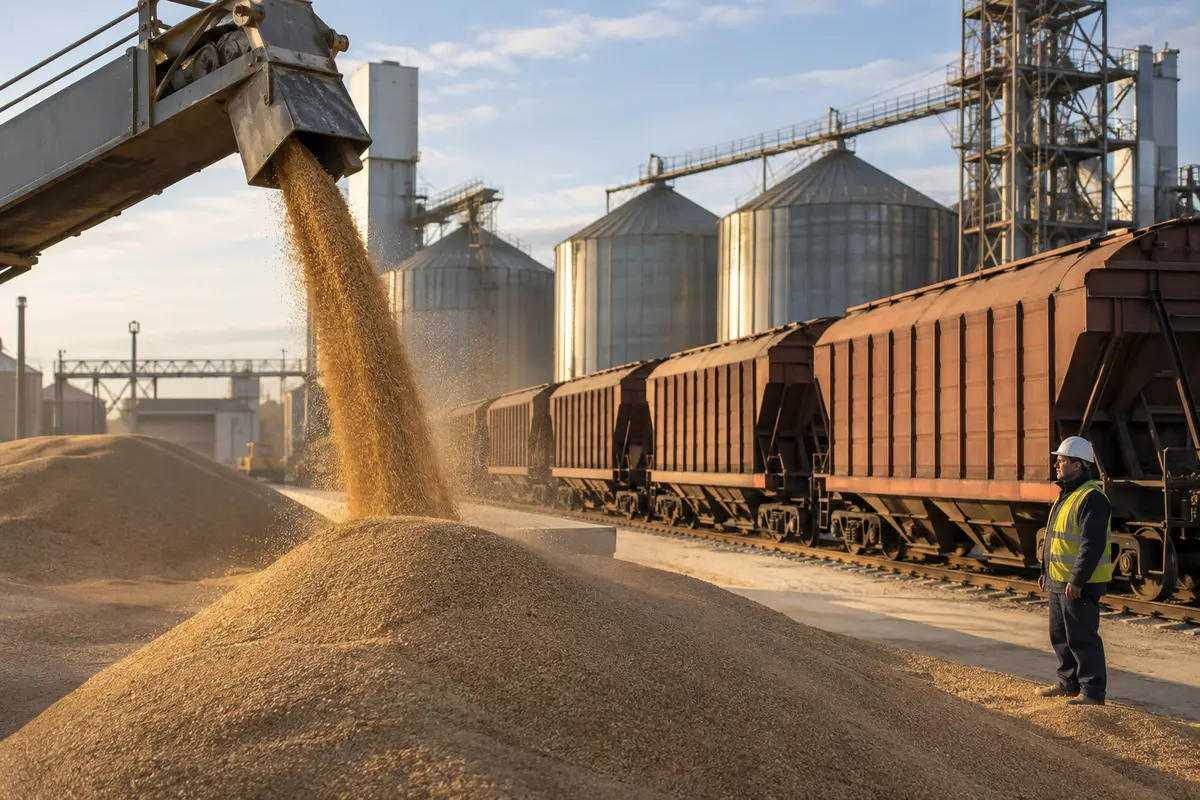
The new split: primary and supplementary parts
Since 2024 the quota is divided into two parts with different allocation logic:
- the primary part — 90% of the total quota, distributed on the historical basis, that is, with reference to participants' past export volumes, and subject to a reduction factor equal to the sampling percentage of the prior period; the factor applies from 2025;
- the supplementary part — 10% of the total quota, plus the volume freed by the reduction factor, plus quota amounts that exporters voluntarily refuse.
In 2024 no reduction factor was applied to the primary part, so the supplementary part of the current season consists of the 10% reserve plus the volumes released through waivers. Exporters may decline their allocations voluntarily: waiver applications are accepted from April 1 to April 20.
The waiver mechanism is not new in itself. During the 2023 test run, companies that declined their allocations waived nearly 815,000 tonnes, and no leading exporters were among them. The two-part design turns such refusals into a redistributable pool instead of lost export capacity.
Primary quota distributed among 261 companies
The primary part of the 2024 quota was distributed among 261 companies, against 203 recipients in 2023. The largest named allocations, with the previous year's figures for comparison, are:
- Green Gates LLC — 4.217 million tonnes (3.242 million tonnes in 2023);
- Reef Trade House — 3.971 million tonnes (4.909 million tonnes in 2023);
- Aston — 2.139 million tonnes (2.774 million tonnes in 2023);
- MZK Export LLC — 1.307 million tonnes (2.114 million tonnes in 2023);
- OZK Trading, a subsidiary of the United Grain Company — 985,749 tonnes (1.1 million tonnes in 2023).
The widening of the recipient list from 203 to 261 companies, together with the reshuffling of individual volumes, shows that the historical basis does not freeze the market structure: allocations move with participants' actual export history from one period to the next.

A possible 4 million tonne addition
The Agriculture Ministry has put forward an initiative to add a supplementary quota of 4 million tonnes this year. A draft resolution was posted on regulation.gov.ru on February 12 and cites updated Rosstat data on production and consumption as well as Federal Customs Service data on exports. If adopted, the additional volume would be distributed among holders of the main quota, and analysts reacted positively to the proposal. Together with the supplementary part, the initiative stands behind the possible increase of the season's quota to 28 million tonnes flagged in the Interfax headline.
Conclusion
The 24 million tonne quota in force from February 15 to June 30, 2024 continues the mechanism of a temporary ceiling on grain exports outside the EAEU, but changes its internal design: the primary part of 90% on the historical basis and the supplementary part of 10% plus waivers make the allocation more flexible than before. The list of 261 recipients, the waiver window from April 1 to April 20 and the Agriculture Ministry's 4 million tonne draft define a season in which the quota may yet grow to 28 million tonnes.




















Leave a comment