Kamaz’s Mali agreement
Trucks and maintenance in the Mali agreement
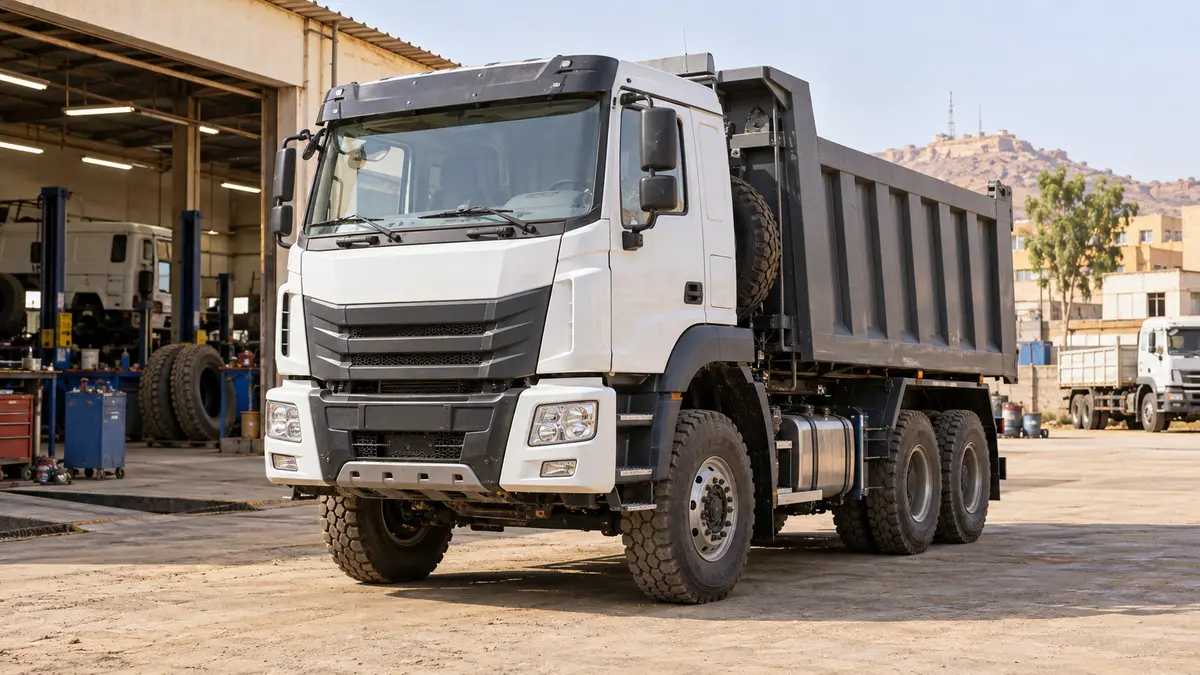
Kamaz signed an agreement with Mali’s SMTL-SA in Bamako on 7 October 2026, Interfax reported the following day. It covers trucks and maintenance workshops, within an intergovernmental agreement with Russia. The workshops are planned for Bamako; local assembly remains under discussion. Spare parts, technology transfer and training in Kazan were also discussed. Kamaz disclosed no financial terms. Interfax attributed a value of 30 billion CFA francs, or about $51.5 million, to Malian television channel Kati24.
Mali’s roads connect production and markets
A separate World Bank operation approved in May 2025 addresses the northern Bamako–Dakar corridor. The International Development Association credit of $219.8 million supports upgrading 137.7 kilometres between Diéma and Sandaré to improve resilience to climatic conditions. Ancillary rural infrastructure in Nioro and Kayes and stronger road agencies are also included. The bank projected indirect benefits for one million people within 150 kilometres of the road, alongside better access to markets, schools and healthcare. Its announcement concerns a road programme approved before the new vehicle contract.
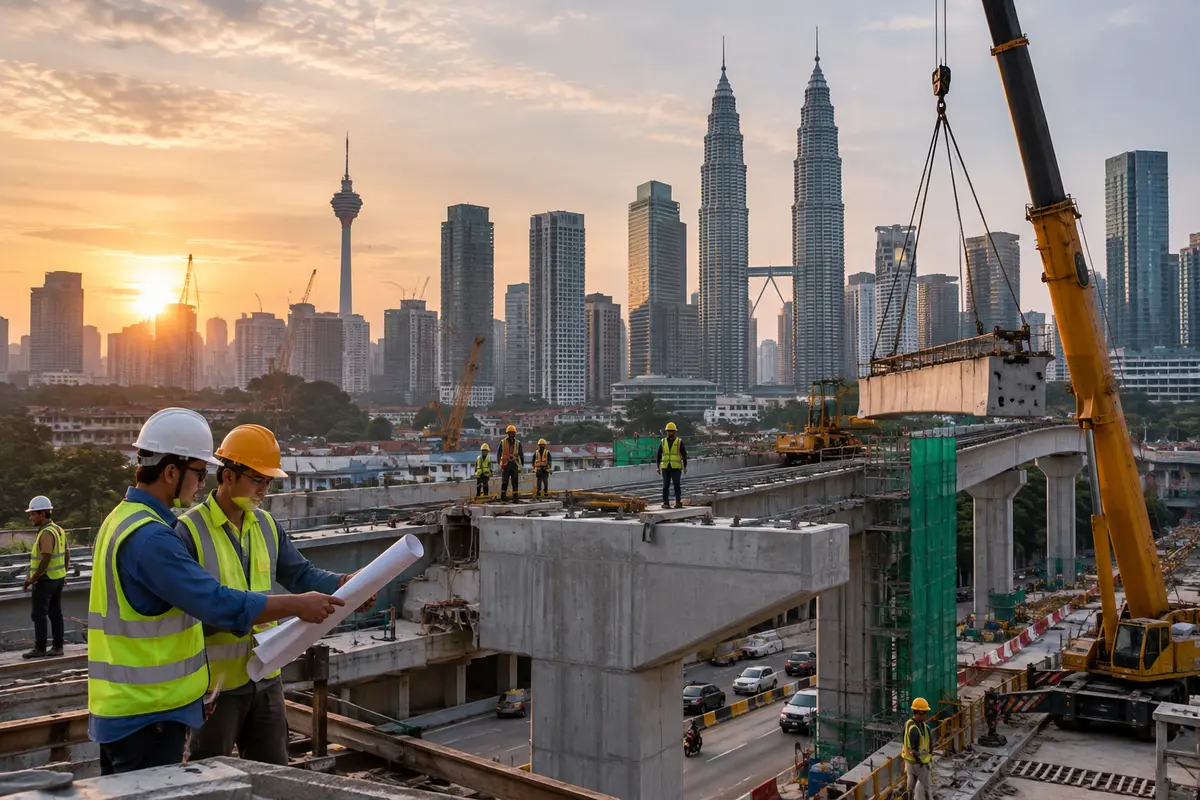
The June 2025 market-engagement notice for that corridor describes the practical construction scope: paving in two lots, 11 kilometres of urban roads, toll-station rehabilitation and truck parking. It also includes 200 kilometres of rural roads and associated infrastructure. The ministry sought feedback from contractors before procurement, identifying overloaded trucks, distant material supplies and security conditions among the risks. Engineering and construction arrangements thus included both road surfaces and facilities used by freight vehicles. The meeting notice scheduled discussion for 24 June, rather than announcing completion of the works.
The World Bank’s January 2024 account of Mali’s mango road describes completed access improvements in a different agricultural area. It reported rehabilitation of 300 kilometres of rural roads and infrastructure around Sikasso, Bougouni and Yanfolila. Works transferred to the General Directorate of Roads in June 2023 connected more than 72 villages in 15 communes. The account identified 137 structures, including bridges and culverts, and described year-round access for previously isolated villages. The bank associated these works with moving fruit from production areas to markets during the rainy season.
Rural access includes maintenance and safety
The 2017 preparation document for Mali’s Rural Mobility and Connectivity Project set out improvement of approximately 1,700 kilometres of existing unpaved roads using targeted repairs. The design combined road works with routine maintenance, safety measures and operational support. Small facilities along the roads could include crop storage and weekly-market buildings, alongside community services. It also proposed training community organizations to undertake maintenance and financing materials, inspections and accident insurance. These were elements of the project design, connecting continued road availability with maintenance arrangements for local agricultural routes.
Flood damage created another infrastructure problem. In April 2025 the World Bank approved $50 million of additional financing for Mali, following severe flooding between August and October 2024. Its statement reported damage to roads and numerous bridges, together with schools and health centres. The financing replenished the Bamako Urban Resilience Project after activation of a $73 million emergency-response component. This was support for disaster recovery and response capacity. The dated announcement places climatic damage within the road context, alongside projects specifically intended to improve transport connections.
A World Bank account from March 2019 also described the link between food distribution and storage. Boubou Lait’s founder recalled seeing substantial dairy production near Djenné, with milk remaining unsold while women travelled between villages to find customers. The cooperative stored fresh milk and offered processed products including yogurt and cheese. The publication described support for emerging agribusiness ventures through the agro-industrial competitiveness project and a local incubator. Its example concerns a particular dairy enterprise and founder’s observations, illustrating the handling and storage activities accompanying movement of food.
Kamaz’s product and engineering history
Kamaz’s engineering activity long predates the Mali agreement. In a March 2014 report on the previous year, the company put research and development spending at three billion roubles, 33 per cent above 2012. It attributed the increase to productivity and cooperation with engineering organizations. Work included the launch of the Kamaz-5490 freight truck, documentation for new dump trucks and development involving all-wheel-drive vehicles. The report also described hybrid freight-vehicle prototypes and preliminary tests of bus chassis. Those dated activities covered several parts of the commercial-vehicle range.
In October 2022, chief executive Sergei Kogogin described localization of 232 component items and the search for replacement supply chains. He said the company had resolved components needed for domestic deliveries following departures of foreign partners. At that time he also emphasized the presence of existing Kamaz fleets in export markets and the economic difficulty of changing an entire vehicle system quickly. Interfax described domestic sales as traditionally taking 85–90 per cent of output. The statement combines the supplier changes of that period with the company’s attention to installed fleets abroad.
A November 2022 update distinguished cab frames from cab interiors. Kamaz said the frame for its K5 generation had already been localized, while it aimed to complete localization of interior components by March 2023. The report described three generations then in production: K3 with the company’s own cab and K4 and K5 using licensed cab designs. It also recorded August output of 40 Kamaz-54901 tractors. The historical update identifies particular production components and the timetable announced for the newer truck family, rather than treating every cab element as the same item.
Transmissions, frames and steel supply
In November 2022 Kamaz took full ownership of its transmission venture with Germany’s ZF, which previously held 51 per cent. Established in Naberezhnye Chelny in 2005, the plant manufactured nine-speed and sixteen-speed manual transmissions for powertrains ranging from 160 to 500 horsepower. Interfax also described a 2021 development-fund loan to localize twelve-speed automatic transmissions. Kamaz said the enterprise continued meeting its needs after the ownership change. This history identifies a transmission manufacturing operation alongside the cab and vehicle assembly activities involved in the wider truck business.
A second ownership change concerned the former joint venture with Daimler in January 2023. Kamaz consolidated its shares, and the business was renamed Trucks Vostok Rus. It managed Compass truck assembly and distribution and a cab-frame plant in Naberezhnye Chelny. The Compass range used components from China’s JAC, initially in the 9 and 12 models. The report identified two production sites, including a frame plant launched in 2019. It therefore described both distribution of a particular vehicle family and manufacturing assets supporting the commercial-vehicle portfolio.
Steel supply featured in a March 2023 coordination meeting with Magnitogorsk Iron & Steel Works. MMK reported replacing some imported products used by Kamaz, particularly high-strength steel, and mastering three new steel grades during the previous year. The companies signed a letter of intent with an operating timetable and responsible parties. MMK said it had supplied more than 100,000 tonnes to Kamaz in 2022 and held approximately 57 per cent of its flat-steel shipments. Products included material for longitudinal frame members and truck cabs, specific structural parts of the vehicle.
Cooperation with component manufacturers
The Industry Ministry of Belarus described cooperation between MAZ and Kamaz in July 2022. A meeting held during the industrial exhibition in Yekaterinburg addressed standardization of their component base and a detailed implementation roadmap. The ministry said the companies intended to divide work into periods and individual items. MAZ’s product range included heavy trucks, buses and trailers, with Russia its principal export market. The discussion thus concerned cooperation across manufacturers of commercial equipment, including how components might be standardized, rather than a completed merger of their production operations.
A later component agreement supplied a concrete purchase value. In February 2026 Kamaz and BATE, the Belarusian Autocomponents holding’s management company, agreed additional supplies worth more than 540 million roubles. Kamaz said purchases from the holding’s enterprises had exceeded 2.5 billion roubles in 2025. The components included generators, starters, drive shafts and anti-lock braking systems. The companies had worked together for more than ten years and approved a cooperation programme for 2024–2027. BATE specializes in starters and generators used by trucks and other types of vehicles and machinery.
Production partnerships outside Russia
The ownership history of component plants in Kazakhstan changed in late 2022. A January 2023 report said Kamaz’s interest in KamLit KZ had been sold to HEAT Motors. The undertaking was building an iron foundry and a drive-axle component plant in Kostanai. Regional authorities described intended manufacture of engine cylinder blocks and heads, together with axle beams and final drives. They linked the ownership change to seeking approval for purchases of European production equipment. The account retained planned capacities and opening dates as project parameters at that historical stage.
Actual output at a separate overseas operation appears in Kazakhstan Automotive Union statistics for January–July 2024. Kamaz-Engineering in Kokshetau produced 524 commercial vehicles, 23.2 per cent fewer than in the corresponding period a year earlier. The same national report counted 4,571 trucks across Kazakhstan’s manufacturers. These figures identify a named producer and its period within the wider country series. They concern vehicles made at the Kokshetau operation, while the Kostanai component projects described earlier had a different location, ownership history and production function.
Plans for a production and service centre in Kyrgyzstan were reported in March 2023 from a draft intergovernmental-commission protocol. The parties were instructed to examine cooperation with a Kyrgyz enterprise to organize local assembly. The Russian side was to submit proposals, including measures to improve the competitiveness of locally produced equipment. A Kyrgyz deputy minister also described a forthcoming visit by specialists to Osh to study local potential and exchange experience. The report documents the preparation and consultation stage of another assembly-and-service proposal within Kamaz’s regional business history.
Export opportunities and market conditions
In September 2025, the Russian Industry and Trade Ministry said Kamaz was considering the Philippine market. Deputy Minister Alexei Gruzdev described direct supplies and the possible localization of commercial-vehicle production. He pointed to GAZ’s existing deliveries from Vietnam as a separate example and discussed the attraction of ASEAN-made status for regional sales. His comments connected potential investment with market conditions and sustained demand. For Kamaz, the announcement was consideration of a new market, while the other manufacturer’s deliveries were already occurring through its own production arrangements.
An April 2026 report on the Russian–Cuban intergovernmental commission placed Kamaz among manufacturers whose vehicles had begun shipping to Cuba. Deputy Prime Minister Dmitry Chernyshenko referred to more than 230 units of machinery and equipment exported over the preceding two years across the wider cooperation programme. His statement also listed GAZ, UAZ and Lada. Separate plans included resuming GAZ assembly and opening a sales office. The aggregate shipment figure belongs to the broader programme; the announcement did not assign that entire quantity to Kamaz trucks.
Export economics were discussed explicitly in September 2022. Kogogin said the exchange rate then made overseas sales loss-making, although the company maintained delivery quotas for established markets. Interfax identified Kazakhstan, Uzbekistan and Vietnam as important destinations in preceding years and reported approximately 6,000 vehicles exported in 2021. The chief executive’s comments addressed conditions at that date alongside disrupted supply chains. They provide historical evidence of the company’s approach to retaining market presence during a difficult trading period, with the export numbers attached to their original year.
Investment and ownership behind the newer range
The Eurasian Development Bank’s participation also formed part of the K5 investment history. Interfax reported in January 2023 that a 3.72 per cent shareholding had returned to Kamaz’s leasing subsidiary in a July 2022 transaction. When the bank entered in 2018, it described more than 9.5 billion roubles of financing, including support for the investment programme and newer truck models. The financing used both equity and bond instruments. The later report separated the original development arrangement from the subsequent transfer of shares back to the group’s financial-leasing business.
In February 2024 Kogogin told Vedomosti that Daimler Truck had completed the sale of its 15 per cent interest in Kamaz. Interfax’s account said neither the buyer nor price had been disclosed. It recalled the German company’s initial investment in 2008 and later increases in its shareholding. The chief executive emphasized continued ability to manufacture and develop commercial vehicles following changes in European partnerships. This was a change in Kamaz’s shareholder structure, distinct from the earlier transfers of specific manufacturing joint ventures into the Russian company’s control.
Production figures for the K5 family
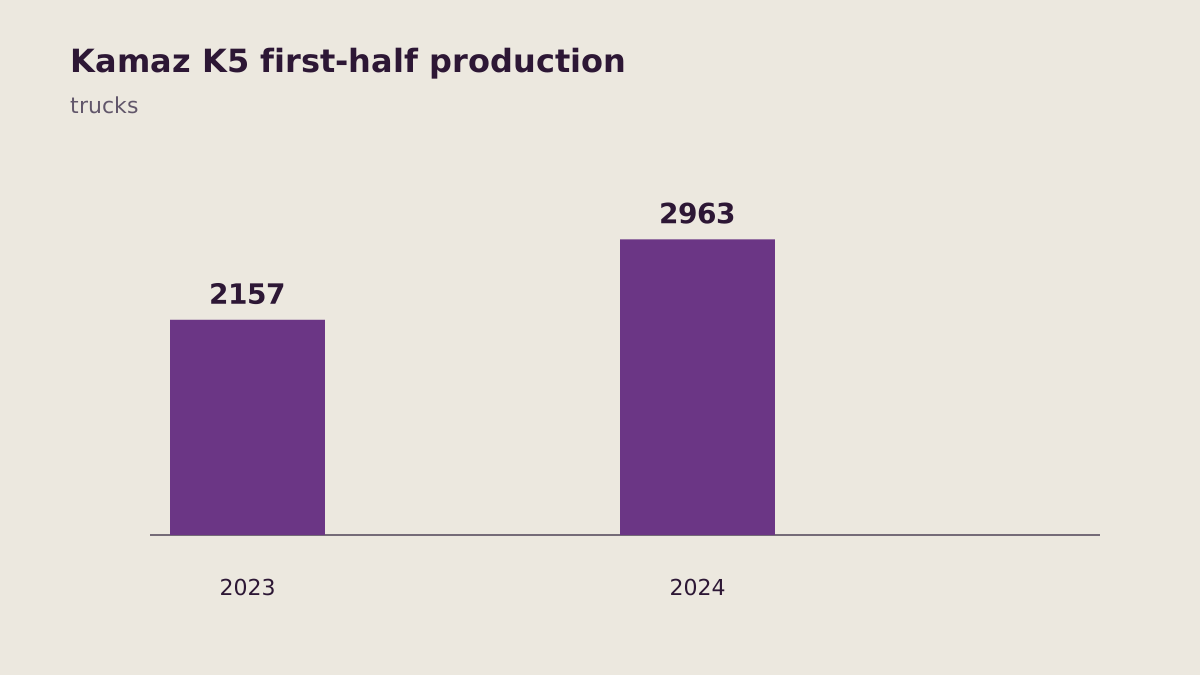
For the first half of 2024, Kamaz reported producing 2,963 trucks in its K5 range, compared with 2,157 in January–June 2023. Its press service described growth of more than 37 per cent and noted the newer vehicles’ higher costs, including localization work. The same July report presented company revenue of 156.3 billion roubles and net profit of 641.1 million under Russian accounting standards.
The group’s commercial-vehicle range also includes passenger transport. In September 2024 Kogogin announced a plan to produce 2,500 buses that year, including 630 electric buses, and said investment in the Nefaz plant exceeded six billion roubles. The report separately described almost 2,000 conventional and electric buses built in 2023. It also gave previous-year sales of more than 1,450 Nefaz buses and 477 Kamaz electric buses. The announcement illustrates the group’s bus operations through distinct production plans, previous output and sales measures, each retaining its stated period.
Equipment development with users
A June 2024 agreement with Segezha Group concerned development, delivery and service of forestry equipment. The companies shared information from trials in Karelia of a Kamaz-1010 harvester and Kamaz-1011 forwarder. Kamaz had developed the equipment with Bauman Moscow State Technical University and planned further research with the forestry group. Segezha’s president described expectations of lower maintenance expenses and improved productivity as aims of the cooperation. The dated project linked prototype testing with an industrial user, extending Kamaz’s engineering activity into machinery for timber operations.
From vehicle manufacture to freight operations
Kamaz’s freight-operation business took shape in 2023. National Carrier was registered in July with charter capital of one billion roubles and applied for the NatCar brand in August. The September report described recruitment of truck drivers and branches in Yekaterinburg and Elektrostal. A spokesman outlined an initial planned fleet of 400 tractor-trailers, divided equally between curtainside and refrigerated equipment, alongside hired carriers. The company expected to work with retail and marketplace customers. These arrangements put vehicle operation and freight services alongside manufacturing within Kamaz’s business activities.
A May 2026 update reported a Natcar transport operation between Russia and Kazakhstan using highly automated Kamaz trucks. The vehicles crossed the border and operated autonomously on part of the route. Kamaz said an experimental legal regime had permitted testing on public roads. Natcar’s fleet then included 18 automated vehicles based on the Kamaz-54901, working on major Russian highways including the M-11, Central Ring Road and M-12. The announcement describes that particular cross-border operation and fleet, adding a dated operational example to the company’s earlier development and logistics projects.
Manufacturing and service activities
- Transmission production.
- Steel for vehicle structures.
- Prototype testing with equipment users.

Leave a comment