POSCO Completes South Korea's Largest Electric Arc Furnace at Gwangyang Works
South Korean steelmaker POSCO has completed construction of the country's largest electric arc furnace (EAF) at its Gwangyang works, a project worth about 600 billion won (US$396.7 million) with an annual capacity of 2.5 million tonnes. The furnace melts recycled scrap metal and can cut carbon emissions by up to 75% compared with conventional blast furnaces.
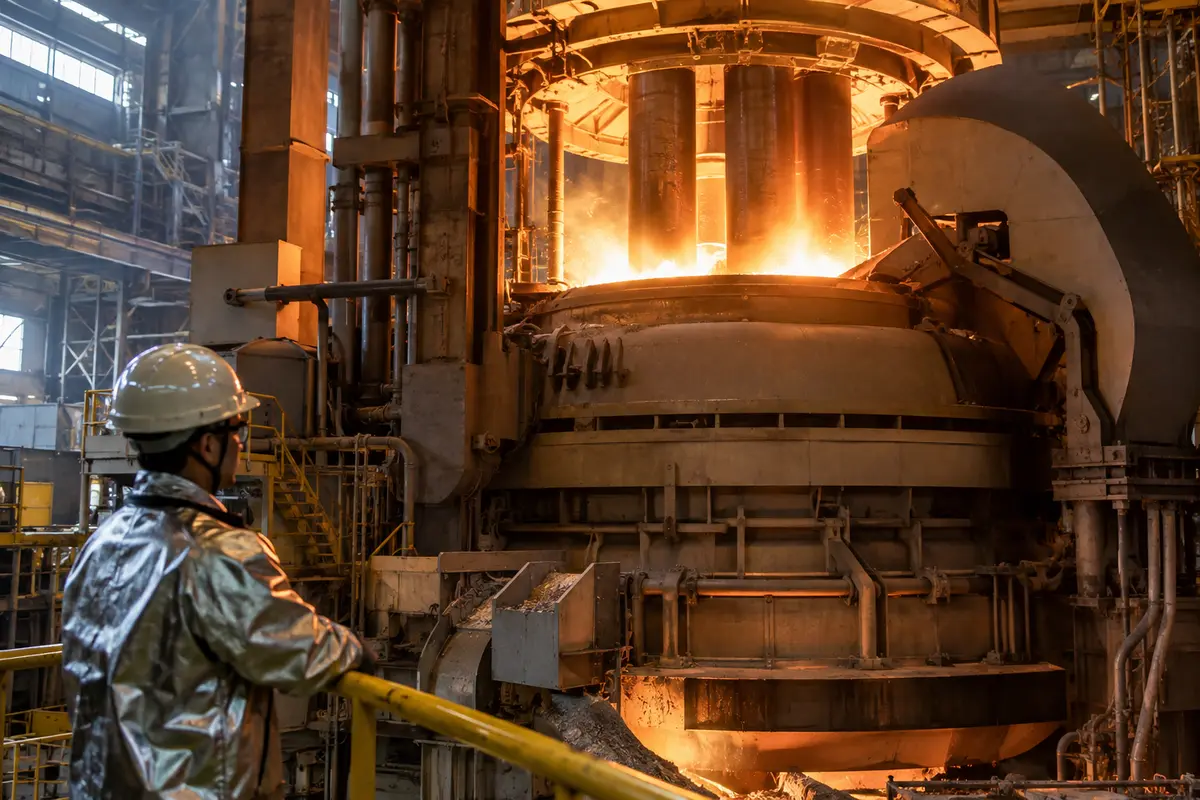
Completion at Gwangyang
SEOUL, June 17, 2026 — POSCO announced that it has completed construction of South Korea's largest electric arc furnace at its Gwangyang steelworks, located about 360 km south of Seoul. The construction took more than two years, and the project was presented in a company announcement published in the corporate newsroom at https://newsroom.posco.com/.
The new facility is designed for an annual capacity of 2.5 million tonnes of steel. POSCO invested about 600 billion won in the furnace, equivalent to roughly US$396.7 million.
Key parameters of the project
The main characteristics of the completed facility are:
- type: electric arc furnace (EAF), the largest of its kind in South Korea;
- location: Gwangyang steelworks, about 360 km south of Seoul;
- annual capacity: 2.5 million tonnes;
- construction period: more than two years;
- investment: about 600 billion won (US$396.7 million).
Scrap recycling and lower emissions
Unlike blast furnaces, an electric arc furnace melts scrap metal and returns it to productive use. According to the company, this recycling route can cut carbon emissions by up to 75% compared with the blast-furnace process. The Gwangyang furnace is therefore a central element of POSCO's effort to reduce the carbon footprint of steelmaking.
Hybrid steelmaking toward 2030
POSCO is also developing a hybrid steelmaking process that combines molten iron produced in blast furnaces with electric arc furnace melting. The approach is intended to reduce emissions while maintaining steel quality. The company's route toward the target model is:
- combine molten iron from blast furnaces with EAF-based scrap melting;
- maintain steel quality while reducing carbon emissions;
- reach mass production of automotive steel sheets and electrical steel via the hybrid process by 2030.
Target products
The hybrid scheme is aimed at two quality-sensitive product families — automotive steel sheets and electrical steel. Mass production of both through the combined blast-furnace and electric arc furnace route is targeted for 2030, letting POSCO lower emissions without sacrificing the steel quality these grades require.
Company information
Company: POSCO
Contacts: POSCO Communications, Seoul; media via https://newsroom.posco.com/
Company website: https://www.posco.com











Leave a comment