Korean Air Completes the Takeover of Asiana, Integrating It as a Subsidiary Within the 1.8 Trillion-Won Deal
Korean Air has completed its takeover of Asiana Airlines, integrating the carrier as a subsidiary and closing a yearslong acquisition under the 1.8 trillion-won merger deal: the airline paid 1.5 trillion won (US$1.04 billion) for 131.57 million newly issued Asiana shares, giving it a 63.88 percent stake. The share acquisition followed antitrust approvals in 14 countries and regions, including the European Union, and opens a two-year post-merger integration in which Asiana, Air Seoul and Air Busan are to be absorbed and their brands retired.
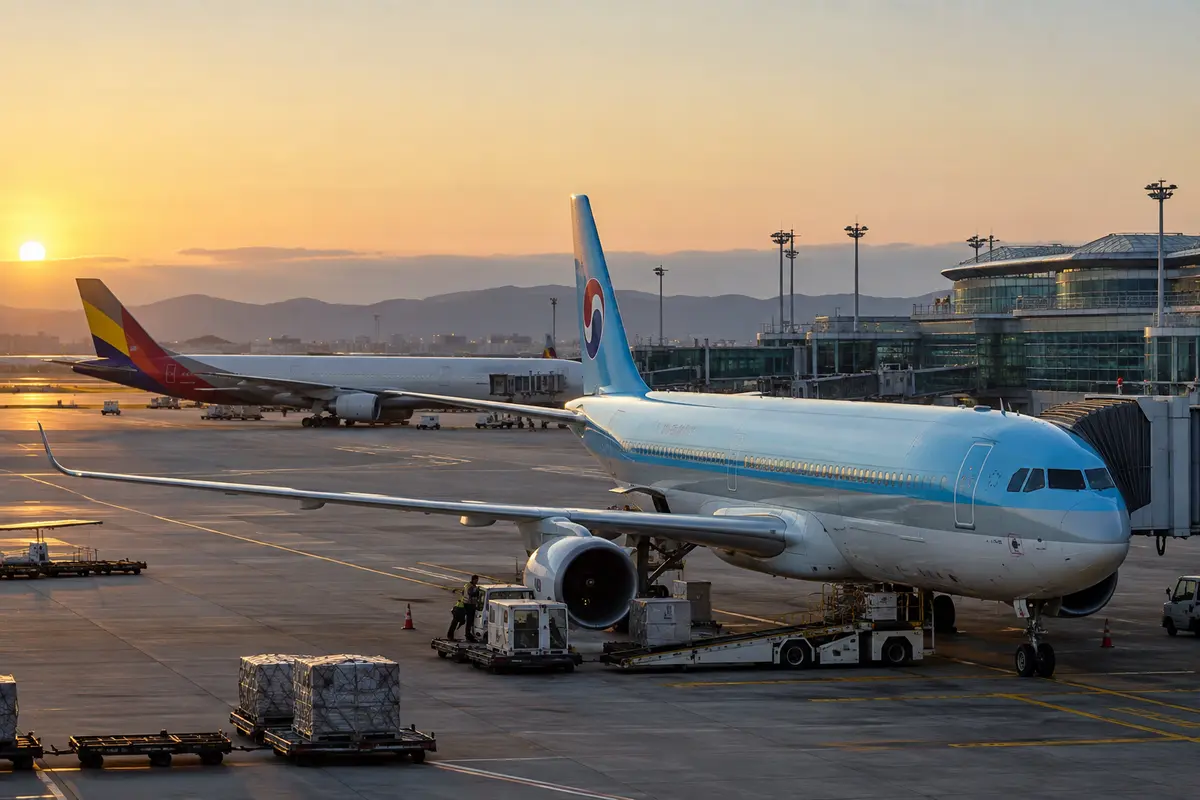
A 1.8 trillion-won deal completed
SEOUL, December 12, 2024 — Korean Air has integrated Asiana Airlines as a subsidiary, wrapping up the yearslong acquisition first announced in November 2020. Under the 1.8 trillion-won merger deal, Korean Air spent 1.5 trillion won (US$1.04 billion) to acquire 131.57 million newly issued Asiana shares, which translates into a 63.88 percent stake in the carrier. Corporate announcements, investor materials and media information of Korean Air are published on the company's website at https://www.koreanair.com/.
From the 2020 announcement to the share acquisition
The integration plan was first announced in November 2020. As its initial step, Korean Air invested 300 billion won in Asiana's perpetual convertible bonds, and the share acquisition was concluded once the antitrust approvals were obtained. The key parameters of the completed transaction are as follows:
- 1.5 trillion won (US$1.04 billion) paid for 131.57 million newly issued Asiana shares;
- a 63.88 percent stake in Asiana Airlines upon completion;
- a total merger deal value of 1.8 trillion won;
- an initial 300 billion-won investment in Asiana's perpetual convertible bonds, made as the first step of the plan announced in November 2020.
Approvals in 14 countries and regions, with concessions for the EU
The share acquisition was concluded after antitrust approvals were obtained in 14 countries and regions, including the European Union. The clearances came with concessions: Asiana's cargo division is to be sold, and routes are to be handed over to other carriers. The sequence of the regulatory path stands as follows:
- the merger plan is announced in November 2020, with 300 billion won placed into Asiana's perpetual convertible bonds as the first step;
- antitrust reviews run in 14 countries and regions, including the European Union;
- concessions are agreed, including the sale of Asiana's cargo division and the handover of routes to other carriers;
- the share acquisition is completed and Asiana is integrated as a Korean Air subsidiary.
A two-year integration: one group, retired brands
Korean Air will now run a two-year post-merger integration. Under the plan, Korean Air is to absorb Asiana Airlines, while Jin Air is to absorb Air Seoul and Air Busan; all three brands are to cease existing after the integration is complete. The process is also to deliver operational changes for passengers and staff:
- diversified time slots on routes where the group carriers currently overlap;
- new destinations added to the combined network;
- the workforce maintained through the integration period.
The world's 12th-largest carrier and the regulator's conditions
The enlarged Korean Air is expected to become the world's 12th-largest carrier by revenue passenger kilometer. The Fair Trade Commission (FTC) has attached corrective measures to its clearance: the group must maintain at least 90 percent of pre-merger seating capacity on key routes, and seat availability on 40 routes must not fall below 90 percent of 2019 levels. A mileage conversion ratio is to be submitted to the commission by June 2025.
Next corporate steps
- Asiana is to hold an extraordinary general meeting on January 16 to appoint directors nominated by Korean Air;
- the mileage conversion ratio is to be reported to the Fair Trade Commission by June 2025;
- the two-year integration is to run its course, after which the Asiana, Air Seoul and Air Busan brands cease to exist.
Company information
Company: Korean Air Co.
Contacts: Korean Air Corporate Communications, Seoul; media information via https://www.koreanair.com/
Company website: https://www.koreanair.com/
















Leave a comment